
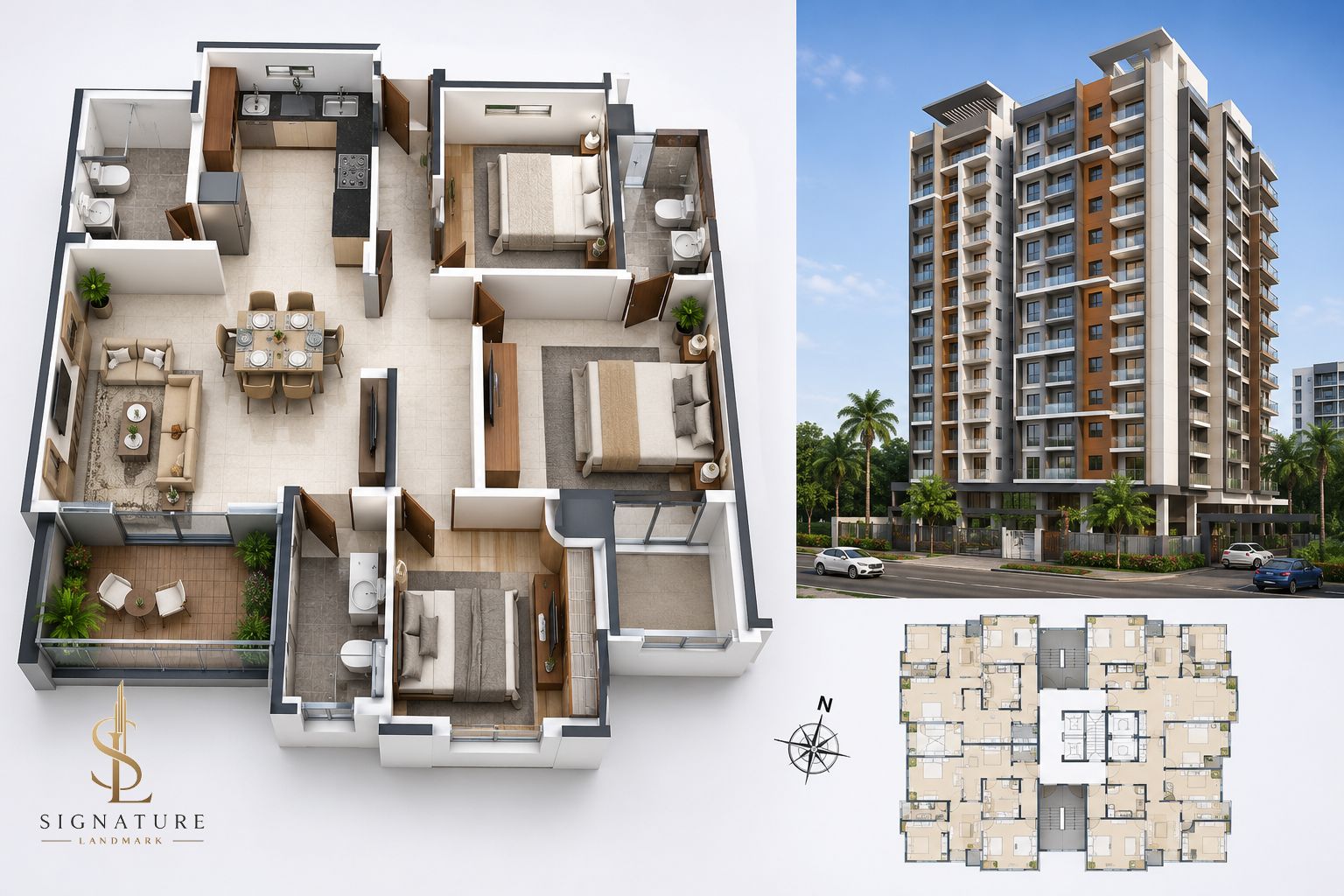

When buying a home, you'll come across several real estate terms such as carpet area, built-up area, and super built-up area. While these may seem confusing at first, understanding them is essential before making any property investment.
One of the most commonly misunderstood terms is built-up area. Many homebuyers assume it refers only to the usable living space, but that's not entirely correct. Knowing what a built-up area includes can help you compare properties, calculate costs, and make an informed purchase decision.
In this guide, we'll explain everything you need to know about the built-up area, how it differs from carpet and super built-up areas, and why it matters when buying a home.
What Is a Built-Up Area?
The built-up area is the total area of your property that includes the carpet area plus the thickness of the walls and other covered spaces such as balconies, terraces, and utility areas.
In simple terms, it represents the entire covered area within your property's boundaries.
The built-up area generally includes:
- Carpet area
- Internal and external wall thickness
- Balcony
- Terrace (if applicable)
- Utility area
- Ducts and flower beds (in some projects)
Typically, the built-up area is 10% to 20% larger than the carpet area, depending on the building's design.
What Is Included in the Built-Up Area?
Understanding what is included helps buyers know exactly what they're paying for.
1. Carpet Area
This is the actual usable floor area inside your home where you can place furniture and walk comfortably.
2. Wall Thickness
Both internal and external walls are included in the built-up area calculation.
3. Balconies
Covered balconies attached to the apartment are part of the built-up area.
4. Utility Spaces
Areas used for washing machines, storage, or household utilities are generally included.
5. Terrace
Private covered terraces may also be counted as part of the built-up area, depending on the builder's calculation.
What Is Not Included?
The following are generally not included in the built-up area:
- Lift lobby
- Staircase
- Common corridors
- Clubhouse
- Swimming pool
- Garden
- Parking area
- Common amenities
These shared spaces are usually included in the super built-up area, not the built-up area.
Built-Up Area vs Carpet Area
Many buyers confuse these two terms.
| Carpet Area | Built-Up Area |
|---|---|
| Usable floor space inside the home | Carpet area plus walls and balconies |
| Does not include wall thickness | Includes wall thickness |
| Smaller measurement | Larger measurement |
| Best for understanding actual living space | Useful for understanding total covered area |
For example:
- Carpet Area: 1,000 sq. ft.
- Wall Area: 120 sq. ft.
- Balcony: 80 sq. ft.
Built-Up Area = 1,200 sq. ft.
Built-Up Area vs Super Built-Up Area
The super built-up area includes everything in the built-up area plus a proportionate share of common areas such as:
- Lobby
- Staircases
- Lift
- Clubhouse
- Gym
- Common corridors
- Reception area
Builders often quote property prices based on the super built-up area, which is why buyers should always ask for the carpet area before making comparisons.
Why Is a Built-Up Area Important?
Understanding the built-up area offers several advantages:
Better Property Comparison
You can compare different projects fairly instead of relying only on the advertised size.
Accurate Pricing
Knowing the actual built-up area helps determine whether the quoted price is reasonable.
Loan Approval
Banks and financial institutions often consider built-up or super built-up areas while processing home loans.
Construction Planning
If you're building or renovating a home, the built-up area helps estimate material requirements and construction costs.
How Is Built-Up Area Calculated?
The basic formula is:
Built-Up Area = Carpet Area + Wall Area + Balcony/Terrace Area
For example:
- Carpet Area = 900 sq. ft.
- Wall Thickness = 120 sq. ft.
- Balcony = 80 sq. ft.
Built-Up Area = 900 + 120 + 80 = 1,100 sq. ft.
Keep in mind that the exact calculation may vary slightly depending on the builder's methodology and project specifications.
Questions to Ask Your Builder
Before booking a property, ask these important questions:
- What is the carpet area?
- What is the built-up area?
- What is the super built-up area?
- Is the balcony included?
- Are terraces included?
- What amenities are included in the super built-up area?
- Is the project RERA registered?
- Are the measurements RERA compliant?
These questions will help you avoid confusion and ensure complete transparency.
Common Mistakes Homebuyers Make
Many buyers unknowingly make these mistakes:
- Looking only at the advertised property size.
- Confusing carpet area with built-up area.
- Ignoring wall thickness while comparing homes.
- Not asking for RERA-approved measurements.
- Comparing prices based solely on super built-up area.
Being aware of these issues can help you make a smarter investment.
Tips for Homebuyers
Before purchasing any property:
- Always verify the carpet area mentioned in the agreement.
- Compare multiple properties using the same area measurement.
- Ask for the detailed area breakup.
- Check RERA registration and approved plans.
- Consult a trusted real estate advisor if needed.
Final Thoughts
Understanding the built-up area is one of the most important steps in buying a home. While it includes the carpet area, walls, balconies, and other covered spaces, it does not include common amenities shared by all residents. By learning the difference between carpet area, built-up area, and super built-up area, you can evaluate properties more accurately, compare prices with confidence, and make a well-informed investment.
At Signature Landmark, we believe informed buyers make better decisions. Whether you're purchasing your first home or investing in real estate, our team is committed to providing transparent guidance and helping you find the right property for your needs.