
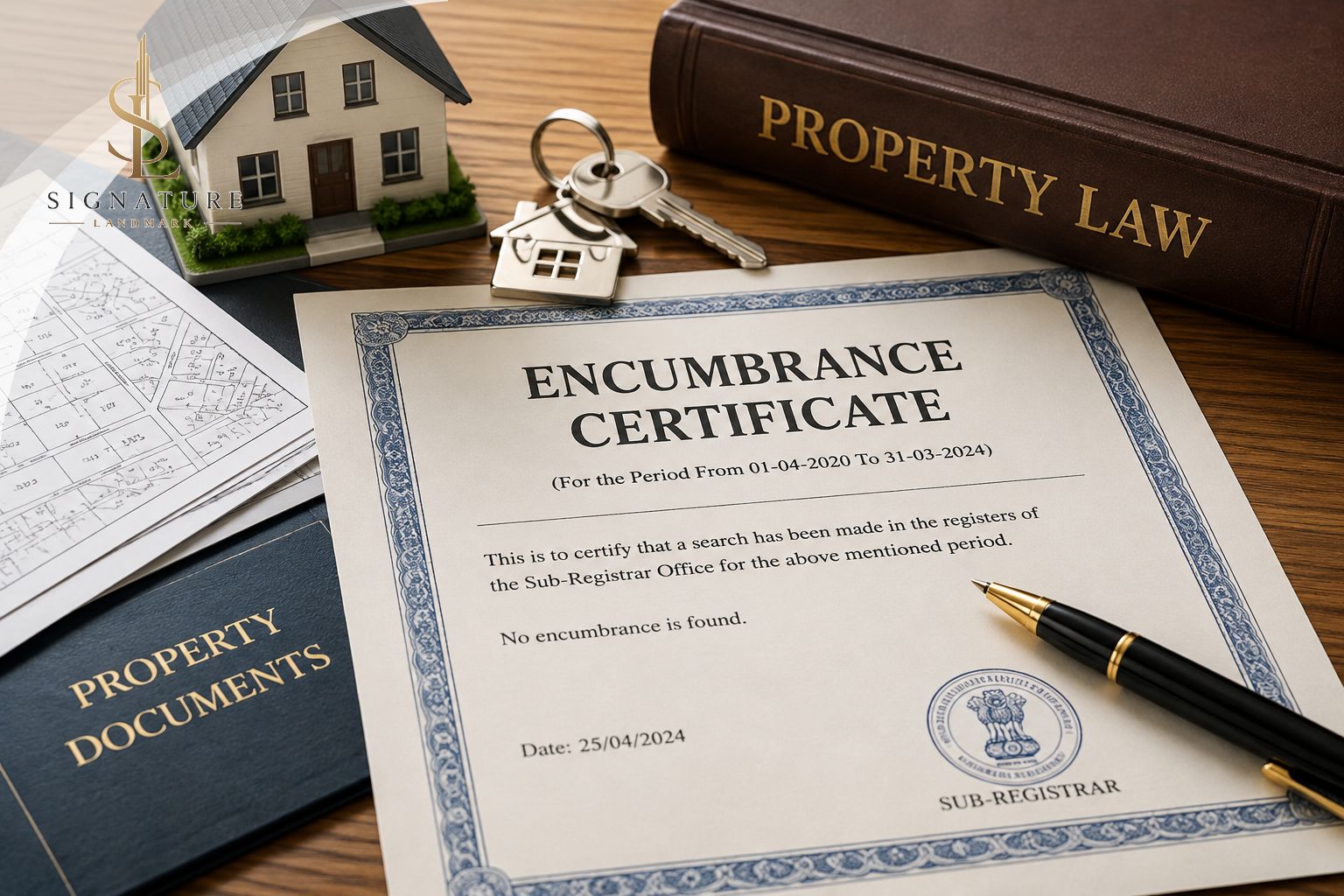

Buying a property is one of the biggest financial decisions you can make. Before purchasing a house, flat, plot, or commercial property, it is important to verify that the property has a clear legal and financial history. One of the most important documents used for this purpose is the Encumbrance Certificate (EC).
An Encumbrance Certificate provides information about registered transactions and certain financial or legal liabilities associated with a property during a specified period. It can help buyers determine whether a property is free from registered encumbrances and whether the seller has a clear title to transfer.
What Is an Encumbrance Certificate?
An Encumbrance Certificate is an official document issued by the concerned government registration authority or sub-registrar's office. It records registered transactions involving a property for a particular period.
An encumbrance may include matters such as a registered mortgage, sale, gift, lease, or other registered transactions affecting the property.
For example, if a property was previously mortgaged to a financial institution and the mortgage was registered, the EC may reflect that transaction. Similarly, registered sale or transfer transactions may appear in the certificate.
However, an EC should not be treated as a complete guarantee that a property has absolutely no legal issues. Certain claims, disputes, or transactions may not appear in an EC. Therefore, buyers should conduct a broader property-title and legal due-diligence process.
Why Is an Encumbrance Certificate Important?
An EC is particularly useful when purchasing property because it provides evidence of registered transactions associated with the property.
1. Helps Verify Property History
The certificate can help buyers understand the registered transaction history of a property during the period covered by the EC.
2. Helps Identify Registered Liabilities
If a registered mortgage or other charge is recorded against the property, the EC may disclose it. This allows buyers to investigate outstanding obligations before completing a purchase.
3. Useful for Home Loans
Banks and financial institutions may request property documents, including an EC, while evaluating a home-loan application. The exact requirements vary by lender and transaction.
4. Supports Property Due Diligence
An EC is an important part of document verification before purchasing residential, commercial, or land property.
5. Helps During Property Transactions
Depending on the transaction and local requirements, an EC may be requested during sale, purchase, registration, or other property-related processes.
What Information Does an EC Contain?
The information shown on an EC can vary depending on the state, registration authority, and type of certificate issued. Generally, it may include:
- Property identification details
- Details of registered transactions
- Names of parties involved in recorded transactions
- Transaction or registration dates
- Registration/document numbers
- Details of mortgages or other registered encumbrances, where applicable
- The period covered by the certificate
It is important to carefully check whether the property description in the EC matches the property you intend to purchase.
How to Obtain an Encumbrance Certificate?
The process differs between states because property registration is administered through state-level systems.
In general, an applicant may obtain an EC through the concerned sub-registrar's office or, where available, the state's online registration/property-registration portal.
A typical process may include:
Step 1: Identify the Registration Authority
Determine the Sub-Registrar's Office that has jurisdiction over the property.
Step 2: Provide Property Details
You may need information such as the survey number, plot number, document number, property description, or other registration details.
Step 3: Select the Required Period
The applicant generally specifies the period for which the EC is required.
Step 4: Submit the Application
The application can be submitted through the applicable online portal or at the relevant registration office.
Step 5: Pay the Applicable Fee
Government-prescribed fees may apply depending on the state and period requested.
Step 6: Receive the Certificate
After processing, the EC may be issued electronically or in physical form, depending on the applicable system.
Documents and Information Required
The exact requirements differ by jurisdiction. Commonly requested information may include:
- Applicant's identification details
- Property address and description
- Survey or plot number
- Relevant registration/document number
- Previous deed details, where available
- Application form
- Applicable government fee
Providing accurate property details is important because incorrect information can result in an incomplete or incorrect search.
What Is a Nil Encumbrance Certificate?
A Nil Encumbrance Certificate generally indicates that no registered encumbrance or transaction falling within the searched records and specified period was found.
However, "nil" should not automatically be interpreted as "the property has no possible legal problem." An EC is limited by the records searched, the period covered, and the types of transactions recorded by the registration system.
Therefore, buyers should also verify the title documents, ownership chain, approvals, taxes, court-related issues where relevant, and other applicable records.
EC vs. Property Title Documents
An Encumbrance Certificate and a title deed serve different purposes.
The title deed helps establish ownership and the chain of title, while the EC provides information about registered transactions or encumbrances recorded against the property during a specified period.
For a safer property purchase, both should be reviewed along with other relevant documents.
Important Things to Check Before Buying Property
Before finalizing a property purchase, buyers should consider checking:
- Original title and previous ownership documents
- Encumbrance Certificate
- Approved building plans, where applicable
- RERA registration, where applicable
- Property tax records
- Land-use and development permissions
- Occupancy/Completion Certificate, where applicable
- Loan or mortgage status
- Identity and authority of the seller
- Pending litigation or disputes, where relevant
Professional legal advice can be valuable when the property has a complicated ownership history or multiple transactions.
Conclusion
An encumbrance certificate is an important property document that helps buyers understand registered transactions and certain registered liabilities associated with a property. It is particularly useful as part of the due-diligence process before purchasing a house, flat, plot, land, or commercial property.
However, an EC should be considered one part of comprehensive property verification, rather than the only document required to establish that a property is legally safe to purchase.
At Signature Landmark, we believe informed property decisions begin with proper documentation and due diligence. Whether you are looking for residential property, commercial property, plots, flats, or land, understanding important documents such as the EC can help you move toward a more confident property transaction.
Looking for professional assistance with your property requirements? Connect with Signature Landmark for guidance on your real estate journey.