
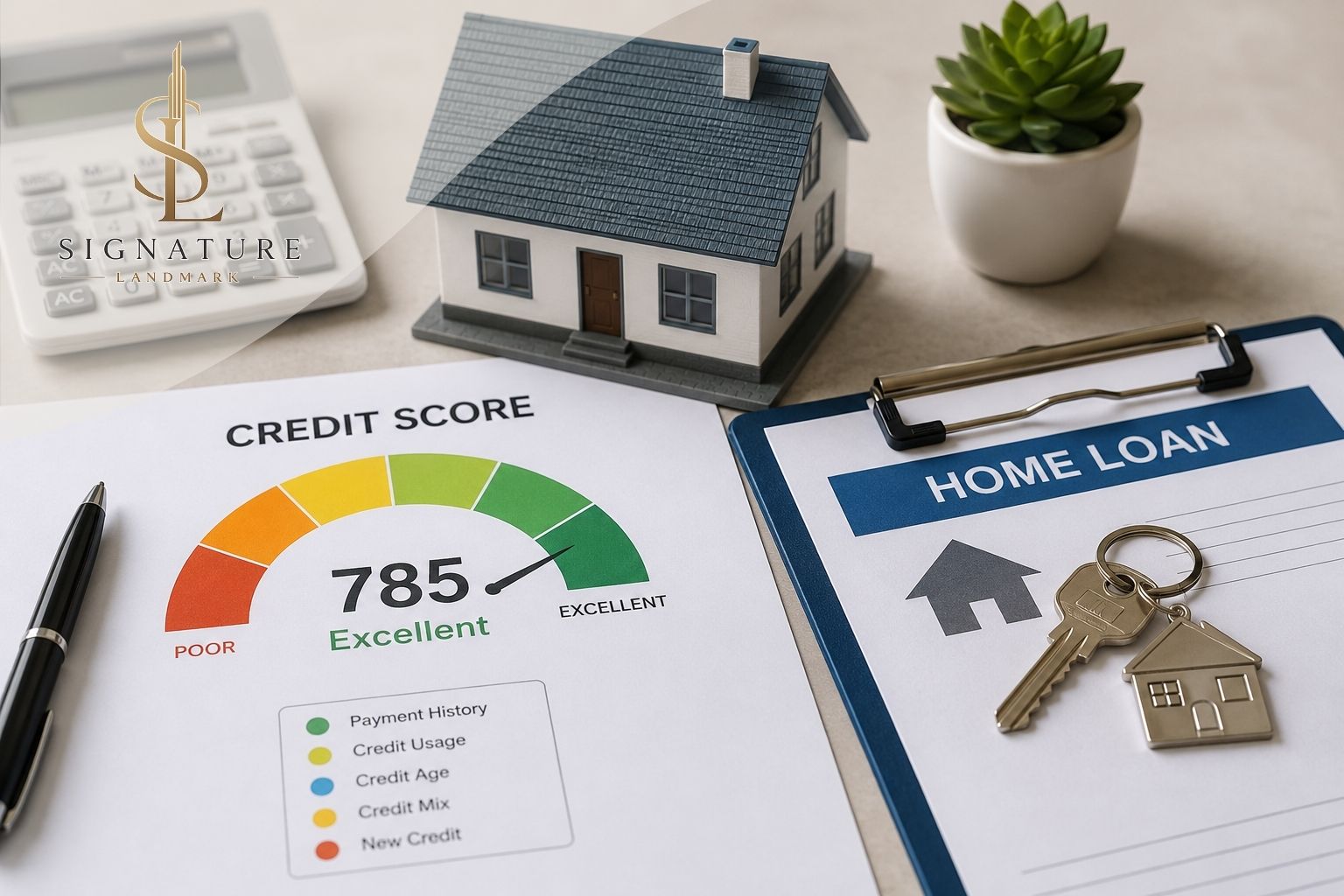

A good credit score can improve your chances of getting a home loan with better terms, while a low score may make borrowing more difficult or expensive. Understanding how your credit score affects a home loan can help you prepare financially before applying.
What Is a Credit Score?
A credit score is a numerical representation of your credit history and repayment behavior. In India, credit bureaus such as CIBIL maintain credit records based on information provided by banks and financial institutions.
Credit scores generally range from 300 to 900. A higher score indicates a stronger credit profile and responsible borrowing behavior.
While lenders consider several factors before approving a home loan, your credit score can play an important role in determining your eligibility, interest rate, loan amount, and other terms.
What Is a Good Credit Score for a Home Loan?
A credit score of 750 or above is generally considered favorable for many loan applications. However, there is no single score that guarantees home-loan approval because every lender has its own eligibility criteria.
A higher score can demonstrate that you have handled previous credit responsibly. It may also give you greater negotiating power when discussing loan terms.
If your score is lower, you should not automatically assume that your home-loan application will be rejected. Lenders may also consider your income, employment, existing debts, repayment capacity, age, property details, and other factors.
Why Does Credit Score Matter for a Home Loan?
1. Helps in Loan Approval
Lenders want confidence that borrowers will repay their loans on time. A strong credit history can indicate responsible financial behavior and may support your loan application.
2. May Help You Get a Better Interest Rate
Your credit profile can influence the terms offered by a lender. Applicants with strong credit histories may have access to more competitive interest rates, depending on the lender and current market conditions.
Even a small difference in the interest rate can have a significant impact on the total interest paid over a long home-loan tenure.
3. Can Influence Loan Terms
A strong credit profile may make it easier to negotiate favorable loan terms. Depending on the lender, this could include the interest rate, processing conditions, or other aspects of the loan.
4. May Affect Loan Amount
Credit score is only one part of the assessment, but a stronger financial profile can support your overall eligibility. Lenders also examine your income, existing obligations, and repayment capacity before deciding the maximum loan amount.
Factors That Affect Your Credit Score
Several aspects of your financial behavior can influence your credit score:
- Repayment history: Missing or delaying EMI and credit-card payments can negatively affect your credit profile.
- Credit utilization: Using a large portion of your available credit limit may indicate higher dependence on credit.
- Length of credit history: A longer history of responsibly managed credit can be beneficial.
- Credit mix: Having a balanced mix of secured and unsecured credit may contribute positively.
- New credit applications: Applying for multiple loans or credit cards within a short period can result in several credit inquiries.
How to Improve Your Credit Score Before Applying for a Home Loan
If you are planning to buy a property, improving your credit profile several months before applying for a home loan can be a smart financial step.
Pay EMIs and Bills on Time
Always make loan EMIs and credit-card payments before their due dates. Setting up automatic payments can help prevent accidental delays.
Keep Credit-Card Balances Under Control
Avoid consistently using a high percentage of your credit limit. Paying your balances on time and maintaining responsible utilization can help demonstrate financial discipline.
Avoid Multiple Loan Applications
Applying for several loans or credit cards within a short period may result in multiple hard inquiries. Compare lenders carefully before submitting applications.
Review Your Credit Report
Check your credit report regularly for incorrect personal details, unfamiliar accounts, or inaccurate repayment information. If you find an error, contact the relevant credit bureau or lender for correction.
Reduce Existing Debt
If possible, pay down outstanding loans and credit-card balances before applying for a home loan. Lower existing obligations can also improve your overall repayment capacity.
Does a Low Credit Score Mean You Cannot Get a Home Loan?
Not necessarily. A low credit score can make the process more challenging, but lenders generally consider your complete financial profile.
If your score is low, focus on improving your repayment history, reducing outstanding debt, and correcting errors in your credit report. You may also consider waiting until your financial profile improves before making a major loan application.
It is important not to take on additional debt simply to improve your credit score. Responsible financial management is more important than having multiple credit accounts.
Credit Score vs. Income: Which Is More Important?
Both are important, but they serve different purposes.
Your credit score helps lenders understand your past credit behavior, while your income and financial obligations help them assess whether you can comfortably repay the proposed home loan.
For example, someone with an excellent credit score but high existing debts may not qualify for as large a loan as expected. Similarly, a borrower with a moderate credit score and stable income may still have financing options.
Final Thoughts
Your credit score is an important part of your home-loan journey. A strong score can improve your financial profile and may help you access better borrowing terms. However, it is only one factor in the lender’s decision.
Before buying a property, review your credit report, maintain timely repayments, manage existing debts, and plan your finances carefully. Along with choosing the right property and location, preparing your finances in advance can make the home-buying process smoother.
If you are planning to buy a residential or commercial property, Signature Landmark can help you make a more informed property decision. Take time to understand your budget, loan eligibility, and long-term financial commitments before finalizing your property purchase.