
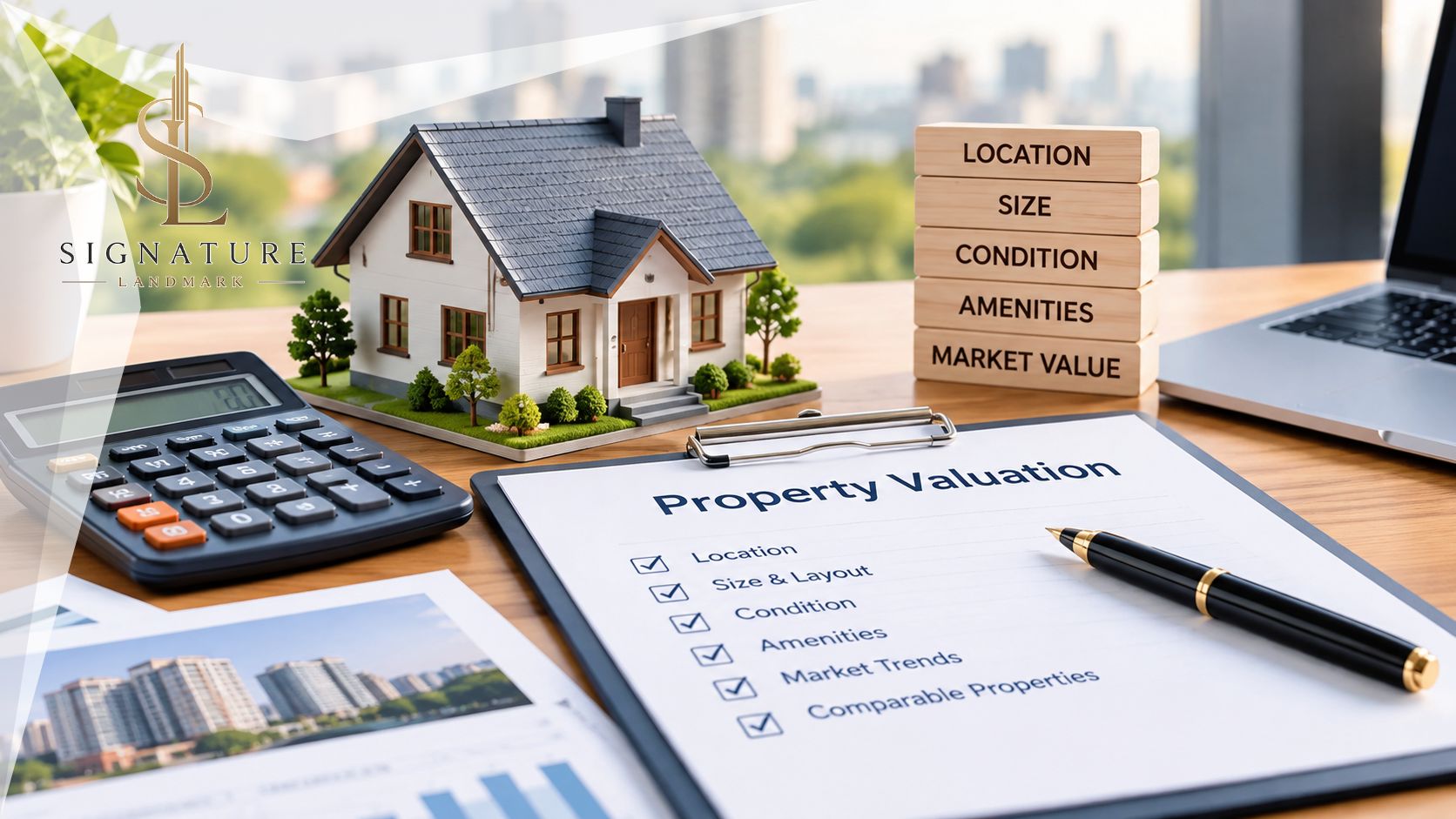

Property valuation is an important step when buying, selling, refinancing, or investing in real estate. Knowing the approximate market value of a property helps owners set a realistic selling price and enables buyers to make informed decisions. A property’s value depends on several factors, including location, size, condition, amenities, demand, and current market trends.
Whether you own a residential property, commercial space, plot, or land, understanding the basics of property valuation can help you avoid pricing mistakes. Here are some practical property valuation tips to help you estimate a property’s worth more effectively.
1. Consider the Property Location
Location is one of the most important factors affecting property value. Properties located in well-developed areas with good connectivity, infrastructure, and essential facilities generally attract greater demand.
When evaluating a property, consider its distance from schools, hospitals, shopping centers, offices, public transport, highways, and other important facilities. Future infrastructure developments, such as roads, metro routes, commercial hubs, and planned developments, can also influence long-term value.
For example, a property with convenient access to major roads and public transportation may command a different price from a similar property in a less accessible area.
2. Compare Similar Properties
One of the easiest ways to understand the market value of a property is to compare it with similar properties in the same locality.
Look for properties with similar:
- Location
- Property type
- Built-up or carpet area
- Age
- Number of bedrooms or rooms
- Amenities
- Floor level
- Parking facilities
- Construction quality
Comparing several similar properties can help you identify the prevailing price range. However, advertised prices and actual transaction prices may differ, so comparisons should be made carefully.
3. Check the Property Size and Layout
The size and usable space of a property have a direct impact on its value. For residential properties, buyers often consider carpet area, built-up area, room sizes, layout, ventilation, and natural light.
A well-designed property with efficient space utilization may be more attractive than a larger property with an inconvenient layout.
For plots and land, factors such as plot dimensions, road frontage, shape, accessibility, and development potential can significantly influence valuation.
4. Evaluate the Property's Condition
The physical condition of a property should be considered during valuation. A well-maintained property may attract more buyers and require fewer immediate repairs.
Inspect important aspects such as
- Structure and construction quality
- Flooring and walls
- Plumbing
- Electrical systems
- Doors and windows
- Kitchen and bathrooms
- Water supply
- Maintenance requirements
If major repairs or renovations are required, these costs may affect the price a buyer is willing to pay.
5. Consider Age and Construction Quality
The age of a building can influence its market value. Newer properties may offer modern layouts, updated facilities, and newer construction standards. However, an older property in a prime location can still have significant value.
Construction quality, structural condition, maintenance history, and the reputation of the developer or builder may also affect buyer interest.
For apartments, the age and maintenance of the overall building or society should be considered rather than focusing only on the individual unit.
6. Look at Amenities and Facilities
Amenities can make a property more attractive and may influence its market value. Depending on the property type, useful facilities may include parking, security, elevators, landscaped areas, clubhouses, gyms, children's play areas, swimming pools, and community spaces.
For commercial properties, features such as parking, visibility, frontage, elevators, power backup, accessibility, and nearby business activity can be particularly important.
However, amenities should be evaluated based on actual buyer demand rather than simply adding an arbitrary amount to the property's value.
7. Verify Legal and Property Documents
Documentation is an important part of property valuation. A property with clear ownership and properly maintained documents can be easier to sell and finance.
Depending on the property, check documents such as the sale deed, title deed, encumbrance certificate, approved building plan, property tax receipts, occupancy certificate where applicable, and relevant registration or regulatory documents.
Any ownership dispute, unauthorized construction, missing documentation, or legal issue can affect the property's marketability and potentially its value.
8. Study Current Market Conditions
Real estate markets change over time. Property values can be influenced by supply and demand, interest rates, employment opportunities, infrastructure development, economic conditions, and buyer preferences.
Instead of relying on an old valuation, review recent market activity in the locality. Understanding whether demand is increasing, stable, or changing can provide useful context when estimating a property's value.
9. Consider Rental Potential
For investment properties, rental income can be an important valuation factor. Check the prevailing rental rates for similar properties and consider factors such as occupancy, maintenance expenses, location, and tenant demand.
A property with good rental potential may appeal to investors looking for regular income. However, rental yield should be considered alongside purchase price, expenses, taxes, and long-term appreciation potential.
10. Get a Professional Valuation
Online property calculators and market comparisons can provide an initial estimate, but they may not capture every factor affecting a property's value.
For an important transaction, consider obtaining an assessment from a qualified property valuer or experienced real estate professional. A professional valuation can consider the property's location, physical condition, documentation, comparable properties, and prevailing market conditions.
Conclusion
Property valuation is not simply about calculating a price per square foot. It involves evaluating location, size, condition, construction quality, amenities, documentation, market conditions, and future potential.
Before buying or selling a property, research comparable properties, inspect the property carefully, verify important documents, and understand the local market. When a precise valuation is required, professional guidance can provide additional confidence.
A realistic valuation can help sellers price their property appropriately, while buyers can use valuation information to assess whether a property fits their budget and investment objectives. With careful research and proper evaluation, property valuation becomes a valuable tool for making more informed real estate decisions.