
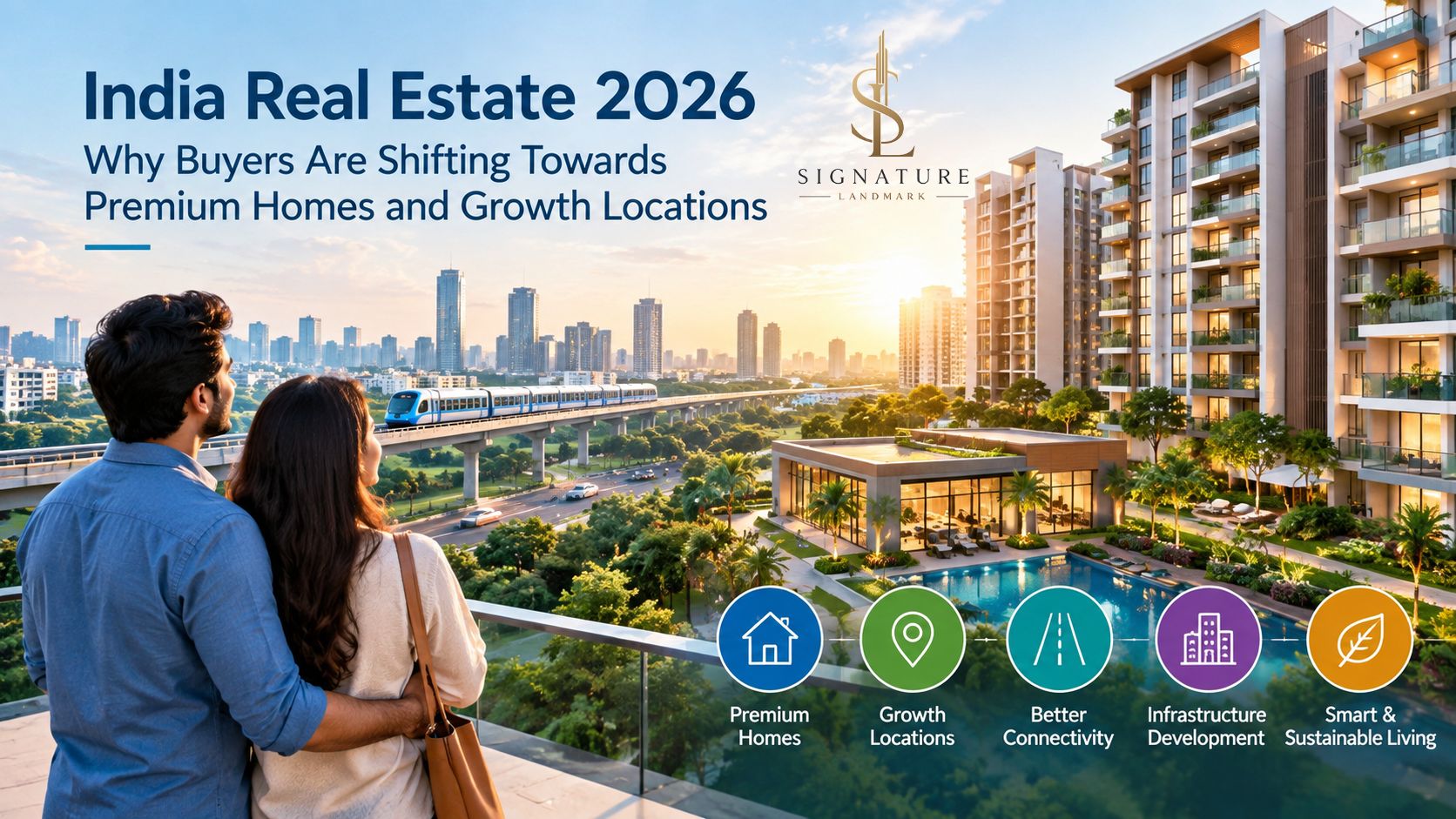

India’s real estate market is entering 2026 with a noticeable shift in buyer preferences. Homebuyers are increasingly looking beyond basic affordability and focusing on premium homes, better amenities, connectivity, lifestyle features, and locations with strong future growth potential. Rising aspirations, improved infrastructure, changing lifestyles, and greater awareness among buyers are influencing purchasing decisions across major Indian cities.
The Indian residential property market has shown resilience in recent years, supported by urbanization, employment growth, infrastructure development, and demand for quality housing. In 2026, these factors continue to shape the market while creating new opportunities for both homebuyers and property investors.
Growing Demand for Premium Homes
One of the most visible trends in India’s real estate sector is the increasing demand for premium and luxury housing. Buyers are willing to invest more when a property offers better construction quality, spacious layouts, modern amenities, security, parking, landscaped areas, and convenient access to important facilities.
Premium homes are no longer limited to luxury buyers. Many upper-middle-income families are also considering upgraded homes that provide greater comfort and lifestyle benefits. Features such as modular kitchens, smart-home technology, fitness centers, swimming pools, clubhouses, children's play areas, green spaces, and improved security are becoming important considerations.
The preference for larger and better-designed homes has also been influenced by hybrid working and changing family requirements. Buyers want homes that can accommodate workspaces, entertainment areas, and comfortable family living.
Location Is Becoming More Important
While property specifications remain important, location continues to be one of the biggest factors influencing real estate decisions. Buyers are increasingly looking at growth locations rather than choosing properties only in established city centers.
Growth corridors located near highways, metro routes, business districts, industrial areas, educational institutions, and upcoming infrastructure projects are attracting attention. These locations can offer relatively competitive property prices while providing opportunities for future appreciation.
For example, expanding areas around major Indian cities are witnessing increased residential development as infrastructure improves and businesses move towards emerging commercial hubs.
Infrastructure Driving Real Estate Growth
Infrastructure development has a direct impact on property demand. New roads, metro networks, ring roads, airports, bridges, public transport systems, and commercial centers can improve connectivity and make previously developing areas more attractive.
In 2026, buyers are therefore paying close attention to planned infrastructure projects before purchasing property. Better connectivity can reduce travel time, improve accessibility, and increase the overall attractiveness of a location.
For investors, infrastructure-led development can also create opportunities for long-term capital appreciation. However, buyers should verify project timelines and government approvals instead of relying solely on future development promises.
Lifestyle and Amenities Matter
Today’s homebuyers are looking for more than four walls and a roof. They increasingly want a complete lifestyle within or around their residential community.
Amenities such as landscaped gardens, walking tracks, gyms, clubhouses, children's play areas, sports facilities, community spaces, parking, and security systems can influence buying decisions.
The concept of integrated townships is also gaining popularity. These developments may combine residential spaces with retail, recreational facilities, open areas, and essential services, creating a more convenient living environment.
Smart and Sustainable Homes
Technology and sustainability are becoming increasingly relevant in residential real estate. Buyers are showing greater interest in smart-home features such as automated lighting, security systems, video doorbells, digital locks, and energy-efficient appliances.
Sustainable construction is another emerging priority. Solar power, rainwater harvesting, waste management, energy-efficient lighting, natural ventilation, and green landscaping can help reduce resource consumption while improving long-term living quality.
As awareness about environmental issues grows, sustainable features may become an increasingly important factor in property selection.
Connectivity with Jobs and Education
For many buyers, proximity to employment centers remains a major consideration. Properties located near IT parks, business districts, industrial areas, and commercial hubs can attract both end-users and investors.
Education and healthcare facilities are equally important. Families often prefer locations with good schools, colleges, hospitals, shopping centers, and daily-need services nearby.
This is why emerging residential corridors with improving social infrastructure are receiving increasing attention.
Buyers Are Becoming More Research-Oriented
Another major change in 2026 is the way buyers research properties. Digital platforms allow customers to compare projects, locations, developers, prices, amenities, reviews, and connectivity before making a decision.
Buyers are also becoming more cautious about documentation and regulatory compliance. Checking title documents, approvals, project registration where applicable, development plans, builder reputation, and other property-related records is essential before investing.
Rather than making decisions purely on advertisements or promotional offers, buyers are increasingly seeking transparent and reliable information.
Opportunities for Property Investors
The shift towards premium homes and growth locations also creates opportunities for investors. Properties in developing corridors can potentially benefit from infrastructure improvements, population growth, commercial expansion, and increasing rental demand.
However, real estate remains a long-term investment, and every location does not guarantee high appreciation. Investors should evaluate factors such as current demand, future infrastructure, employment opportunities, developer credibility, rental potential, property prices, and exit possibilities.
A balanced approach can help investors identify properties with sustainable long-term potential rather than chasing short-term market trends.
What Should Homebuyers Look for in 2026?
Before purchasing a premium home or property in an emerging location, buyers should consider:
- Location and future connectivity
- Developer reputation and project track record
- Construction quality and layout
- Available amenities and maintenance costs
- Legal documentation and approvals
- Nearby schools, hospitals, and shopping facilities
- Employment and business opportunities nearby
- Future infrastructure developments
- Resale and rental potential
- Overall affordability and financing options
Conclusion
India’s real estate market in 2026 reflects a more informed and aspirational buyer. People are increasingly looking for homes that combine quality, comfort, connectivity, amenities, sustainability, and long-term value.
Premium housing and growth locations are gaining attention because they can offer a combination of lifestyle benefits and future potential. However, buyers should conduct proper research and evaluate both present-day convenience and long-term prospects before making a purchase.
For homebuyers and investors, the key opportunity lies in identifying locations where infrastructure, employment, social amenities, and residential demand are developing together. With careful research and professional guidance, 2026 can offer attractive opportunities in India’s evolving real estate landscape.