
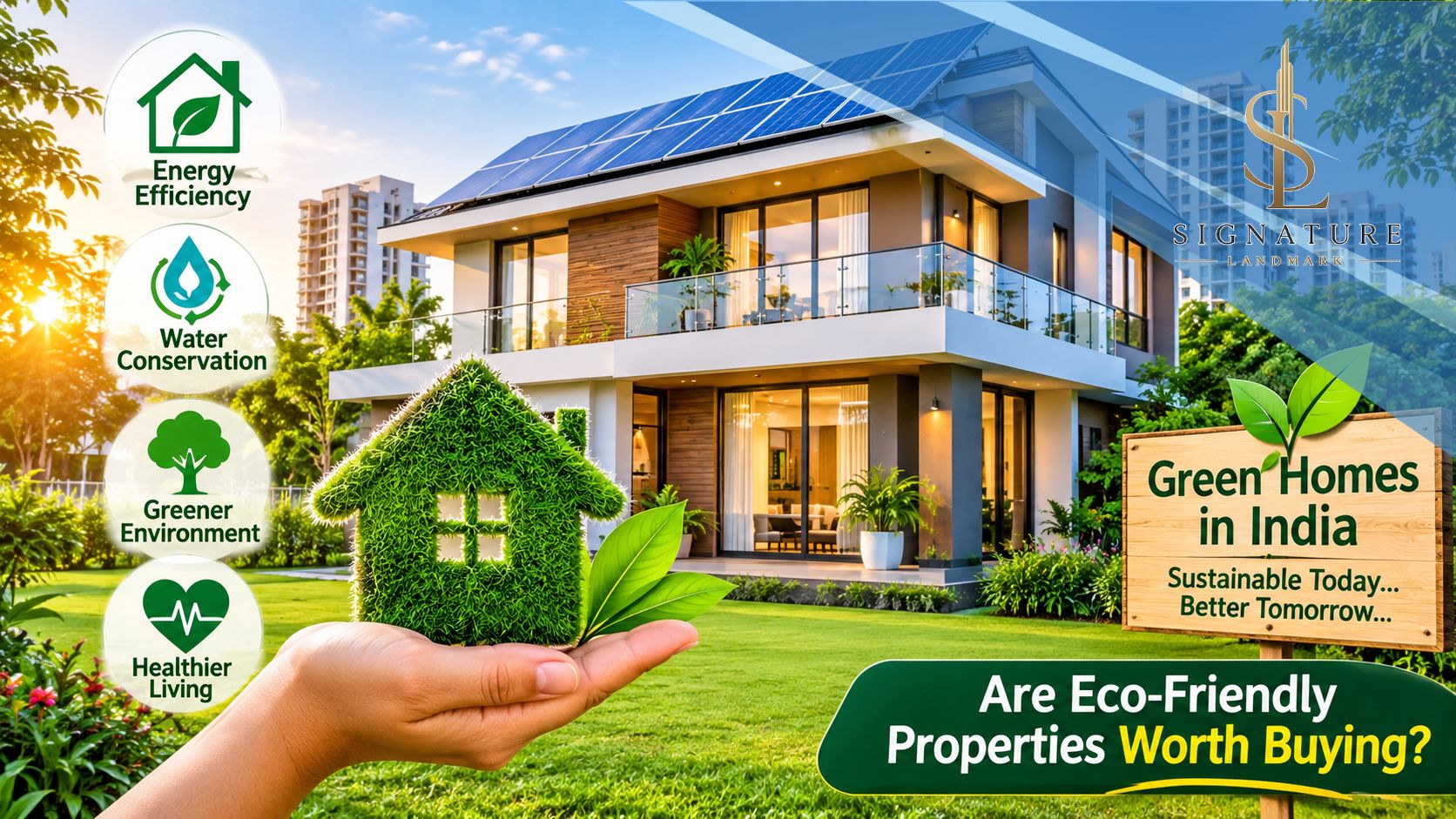

With growing environmental concerns, rising electricity bills, and increasing awareness of sustainable living, green homes are becoming an important trend in India's real estate market. Homebuyers today are not only looking for attractive designs, modern amenities, and good locations but also properties that offer energy efficiency, water conservation, and a healthier living environment.
Green homes are designed to reduce environmental impact while providing comfort and long-term savings to residents. From solar panels and rainwater harvesting systems to energy-efficient lighting and sustainable construction materials, these properties are changing the way people think about modern housing.
But an important question remains: Are eco-friendly properties really worth buying in India in 2026? Let's explore their benefits, costs, investment potential, and prospects.
1. What Are Green Homes?
Green homes are residential properties designed and constructed using environmentally friendly practices. Their main objective is to reduce energy consumption, conserve natural resources, and minimize pollution.
Unlike conventional homes, green buildings focus on sustainable construction and efficient resource management.
Some common features of green homes include
- Solar panels for renewable electricity.
- Rainwater harvesting systems.
- Energy-efficient LED lighting.
- Natural ventilation and maximum daylight.
- Water-saving taps and plumbing fixtures.
- Environment-friendly construction materials.
- Waste management and recycling systems.
- Green spaces, gardens, and tree plantations.
These features help create comfortable homes while reducing their environmental footprint.
2. Why Are Green Homes Becoming Popular in India?
India's real estate sector is gradually moving towards sustainable development. Increasing urbanization, climate change, and rising household expenses are encouraging buyers to consider eco-friendly housing.
Several factors are driving this demand.
Rising Electricity Costs: Solar energy and energy-efficient appliances can help households reduce their monthly electricity expenses.
Environmental Awareness: More people understand the importance of reducing carbon emissions, conserving water, and protecting natural resources.
Government Initiatives: Policies promoting renewable energy, energy efficiency, and sustainable building practices are encouraging developers to adopt greener construction methods.
Changing Buyer Preferences: Modern homebuyers increasingly value natural lighting, open spaces, better ventilation, and healthier surroundings.
As a result, green housing is becoming an attractive option for both homebuyers and property investors.
3. Major Benefits of Buying an Eco-Friendly Property
Investing in a green home can provide several advantages over traditional residential properties.
A. Lower Electricity Bills
One of the biggest advantages of green homes is reduced energy consumption. Solar panels, LED lights, energy-efficient appliances, and proper insulation can significantly reduce electricity usage.
Over time, these savings can help homeowners manage household expenses more effectively.
B. Water Conservation
Water scarcity is a growing concern in many Indian cities. Green homes often include rainwater harvesting, wastewater recycling, and water-efficient fixtures.
These systems help reduce dependence on external water sources and support responsible water management.
C. Healthier Living Environment
Green homes generally focus on natural ventilation, daylight, better indoor air quality, and reduced exposure to harmful construction materials.
These features can make everyday living more comfortable and pleasant.
D. Long-Term Cost Savings
Although some green homes may have higher initial construction or purchase costs, energy and water savings can help offset the additional investment over time.
E. Better Future Market Appeal
As sustainability becomes more important, properties with verified green features may attract buyers who value energy efficiency and environmentally responsible living.
4. Are Green Homes More Expensive Than Traditional Homes?
The initial cost of an eco-friendly property can sometimes be higher than that of a conventional home.
This is because sustainable construction may involve specialized materials, solar installations, efficient plumbing systems, and advanced building technologies.
However, the additional cost depends on the project's design, location, construction quality, and sustainability features.
| Factor | Traditional Home | Green Home |
|---|---|---|
| Initial cost | Generally standard | Maybe higher |
| Electricity usage | Can be higher | Designed to be lower |
| Water management | Basic systems | Conservation-focused |
| Natural lighting | Depends on design | Often prioritized |
| Maintenance | Depends on materials | Depends on green systems |
| Long-term savings | May be limited | Potentially higher |
Buyers should compare the total cost of ownership rather than focusing only on the initial purchase price.
5. Green Homes and Real Estate Investment Opportunities in India
Green housing is creating new opportunities in India's residential real estate market.
Developers are increasingly incorporating sustainable features into residential projects to attract environmentally conscious buyers.
Cities such as Pune, Bengaluru, Hyderabad, Mumbai, and Nagpur are seeing growing interest in modern residential developments that emphasize green spaces, energy efficiency, and sustainable infrastructure.
For investors, eco-friendly properties may offer several potential advantages:
- Attract buyers interested in sustainable living.
- Improve property differentiation in competitive markets.
- Potentially reduce operating expenses for tenants.
- Appeal to environmentally conscious businesses and families.
- Support long-term property marketability.
However, green features alone do not guarantee higher rental income or property appreciation. Location, connectivity, infrastructure, developer reputation, and market demand remain important investment factors.
6. Green Homes in Nagpur: A Growing Opportunity
Nagpur has significant potential for sustainable residential development because of its expanding urban infrastructure and growing housing requirements.
With increasing interest in planned townships, modern apartments, and residential plots, buyers can explore properties that incorporate environmentally responsible features.
Some important features to look for when purchasing a green home in Nagpur include:
- Solar-powered common areas.
- Rainwater harvesting facilities.
- Proper drainage and water management.
- Landscaped gardens and green spaces.
- Energy-efficient lighting.
- Waste segregation and disposal systems.
- Good ventilation and natural daylight.
Nagpur's climate also makes features such as shaded windows, effective ventilation, rooftop solar systems, and heat-resistant construction materials particularly valuable.
For homebuyers, choosing a property with these facilities can contribute to comfortable and responsible living.
7. Important Things to Check Before Buying a Green Home
Not every property advertised as eco-friendly is genuinely sustainable. Buyers should carefully verify the developer's claims before making an investment.
Consider these important checks:
1. Verify Green Building Certification: Check whether the project has a recognized certification such as IGBC, GRIHA, or another applicable green building rating.
2. Check Solar Facilities: Understand whether solar panels are installed, what they power, and who is responsible for maintenance.
3. Examine Water Management: Ask about rainwater harvesting, wastewater treatment, and water recycling facilities.
4. Review Construction Quality: Check the materials, insulation, ventilation, and overall construction standards.
5. Understand Maintenance Costs: Some sustainable systems require regular servicing. Ask about maintenance responsibilities and charges.
6. Verify Legal Documents: Check the property's title, approved building plans, RERA registration where applicable, and occupancy-related documents.
These checks can help buyers make informed decisions and avoid investing in projects that make unsupported environmental claims.
8. What Is the Future of Green Homes in India?
The future of sustainable housing in India looks promising. Growing environmental awareness, renewable energy adoption, smart home technologies, and changing consumer expectations are likely to encourage more developers to incorporate green features.
In the coming years, technologies such as smart energy monitoring, rooftop solar systems, recycled construction materials, automated water management, and electric vehicle charging infrastructure may become increasingly common in residential projects.
Green homes may gradually move from being a premium housing choice to becoming an important part of mainstream residential development.
Developers who prioritize sustainability, construction quality, and efficient resource management may be better positioned to meet evolving buyer expectations.
Conclusion: Are Eco-Friendly Properties Worth Buying?
Yes, green homes can be worth buying in India in 2026, particularly for people who value long-term savings, environmental responsibility, and healthier living conditions.
Although the initial purchase cost may sometimes be higher, energy efficiency, water conservation, and better resource management can provide meaningful long-term benefits.
However, buyers should not purchase a property simply because it is marketed as a green home. It is essential to evaluate its actual sustainable features, certifications, location, construction quality, legal approvals, and overall investment potential.
At Signature Landmark, we believe that the future of real estate is not just about building better homes but also about creating sustainable and comfortable communities.