
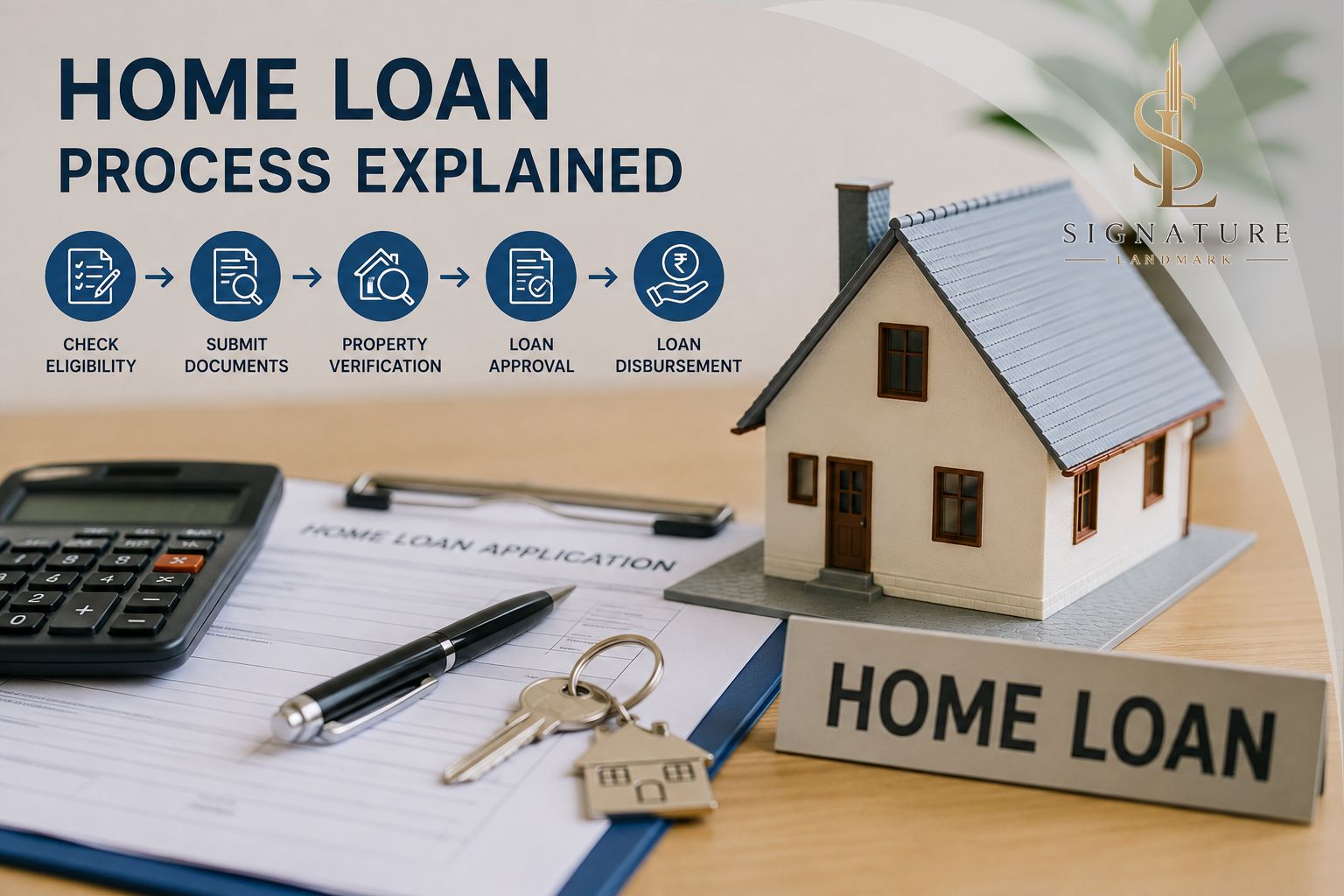

Buying a home is one of the biggest financial decisions in life, and for most people, a home loan makes this dream possible. While the process may seem complicated at first, understanding each step can make it much easier. Whether you're purchasing your first home, investing in property, or buying a residential plot, knowing how the home loan process works will help you make informed decisions.
In this guide, we'll explain the complete home loan process in simple terms, from checking eligibility to loan disbursement.
What Is a Home Loan?
A home loan is a financial product offered by banks and housing finance companies that helps individuals purchase, construct, renovate, or extend a property. The borrower repays the loan amount through Equated Monthly Installments (EMIs) over a fixed tenure, usually ranging from 5 to 30 years.
Step 1: Check Your Home Loan Eligibility
Before applying for a home loan, lenders evaluate your financial profile to determine your eligibility.
The following factors are considered:
- Age
- Monthly income
- Employment type (salaried or self-employed)
- Credit score (preferably 750 or above)
- Existing loans and liabilities
- Work experience or business stability
- Property value
Improving your credit score and reducing existing debt can significantly increase your chances of loan approval.
Step 2: Decide Your Budget
Calculate how much you can comfortably afford before searching for a property.
Keep these expenses in mind:
- Down payment (typically 10%–25% of the property value)
- Registration and stamp duty charges
- Interior and furnishing costs
- Maintenance charges
- Emergency savings
Use a home loan EMI calculator to estimate your monthly repayment and choose a comfortable EMI.
Step 3: Compare Home Loan Offers
Different banks and financial institutions offer different interest rates and loan features.
Compare the following before selecting a lender:
- Interest rate
- Processing fee
- Loan tenure
- EMI flexibility
- Prepayment and foreclosure charges
- Customer service
- Loan processing time
Even a small difference in the interest rate can save a significant amount over the loan tenure.
Step 4: Gather Required Documents
The lender will ask for several documents to verify your identity, income, and property details.
Personal Documents
- Aadhaar Card
- PAN Card
- Passport-size photographs
- Address proof
Income Documents
For Salaried Applicants:
- Salary slips (last 3–6 months)
- Bank statements
- Form 16
- Income Tax Returns (if required)
For Self-Employed Applicants:
- Income Tax Returns
- GST returns (if applicable)
- Business proof
- Profit and Loss Statement
- Bank statements
Property Documents
- Sale Agreement
- Title Deed
- Property Tax Receipts
- Approved Building Plan
- RERA Registration (if applicable)
- Encumbrance Certificate
- Occupancy Certificate (for ready properties)
Keeping these documents ready speeds up the approval process.
Step 5: Submit the Loan Application
Complete the loan application online or visit the lender's branch.
Provide accurate details regarding:
- Personal information
- Employment
- Income
- Existing financial obligations
- Property details
The lender may charge a processing fee while accepting your application.
Step 6: Verification Process
After receiving your application, the lender verifies all submitted documents.
This usually includes:
- Identity verification
- Income verification
- Employment verification
- Credit history check
- Property document verification
Some lenders may also conduct a physical verification of your residence or workplace.
Step 7: Property Evaluation
The lender appoints a technical expert to inspect the property.
They evaluate:
- Market value
- Construction quality
- Legal ownership
- Property location
- Future resale value
This step ensures that the property offers sufficient security against the loan.
Step 8: Loan Approval
If all checks are satisfactory, the lender issues a sanction letter.
The sanction letter contains:
- Approved loan amount
- Interest rate
- EMI amount
- Loan tenure
- Terms and conditions
- Validity period
Read the sanction letter carefully before accepting the loan.
Step 9: Signing the Loan Agreement
Once you accept the loan offer, you'll sign the loan agreement.
This legal document outlines:
- Borrower's responsibilities
- EMI schedule
- Interest calculation
- Default conditions
- Prepayment rules
Ensure you understand every clause before signing.
Step 10: Loan Disbursement
After completing all legal formalities, the lender disburses the loan.
The amount may be released:
- In full for ready-to-move properties.
- In stages for under-construction projects, based on construction progress.
The payment is generally made directly to the builder or seller.
Tips to Improve Home Loan Approval
Follow these simple tips to improve your chances of approval:
- Maintain a credit score above 750.
- Pay existing EMIs on time.
- Avoid multiple loan applications.
- Keep all documents updated.
- Choose an EMI that fits your income.
- Declare your income honestly.
- Save for a larger down payment.
Common Mistakes to Avoid
Many buyers unknowingly make mistakes that delay loan approval.
Avoid these common errors:
- Ignoring your credit score
- Choosing the longest tenure without comparison
- Not comparing lenders
- Missing required documents
- Overstretching your repayment capacity
- Not reading loan terms carefully
- Ignoring additional costs such as insurance and processing fees
Final Thoughts
A home loan doesn't have to be overwhelming when you understand the process. From checking your eligibility and preparing documents to loan approval and disbursement, every step plays an important role in ensuring a smooth home-buying journey.
If you're planning to buy a home or invest in real estate, taking time to compare loan options and prepare your finances can help you secure better terms and save money in the long run.
At Signature Landmark, we guide homebuyers through every stage of their property journey—from selecting the right property to understanding home loan options and documentation. With the right guidance, owning your dream home becomes a simpler and more confident experience.