
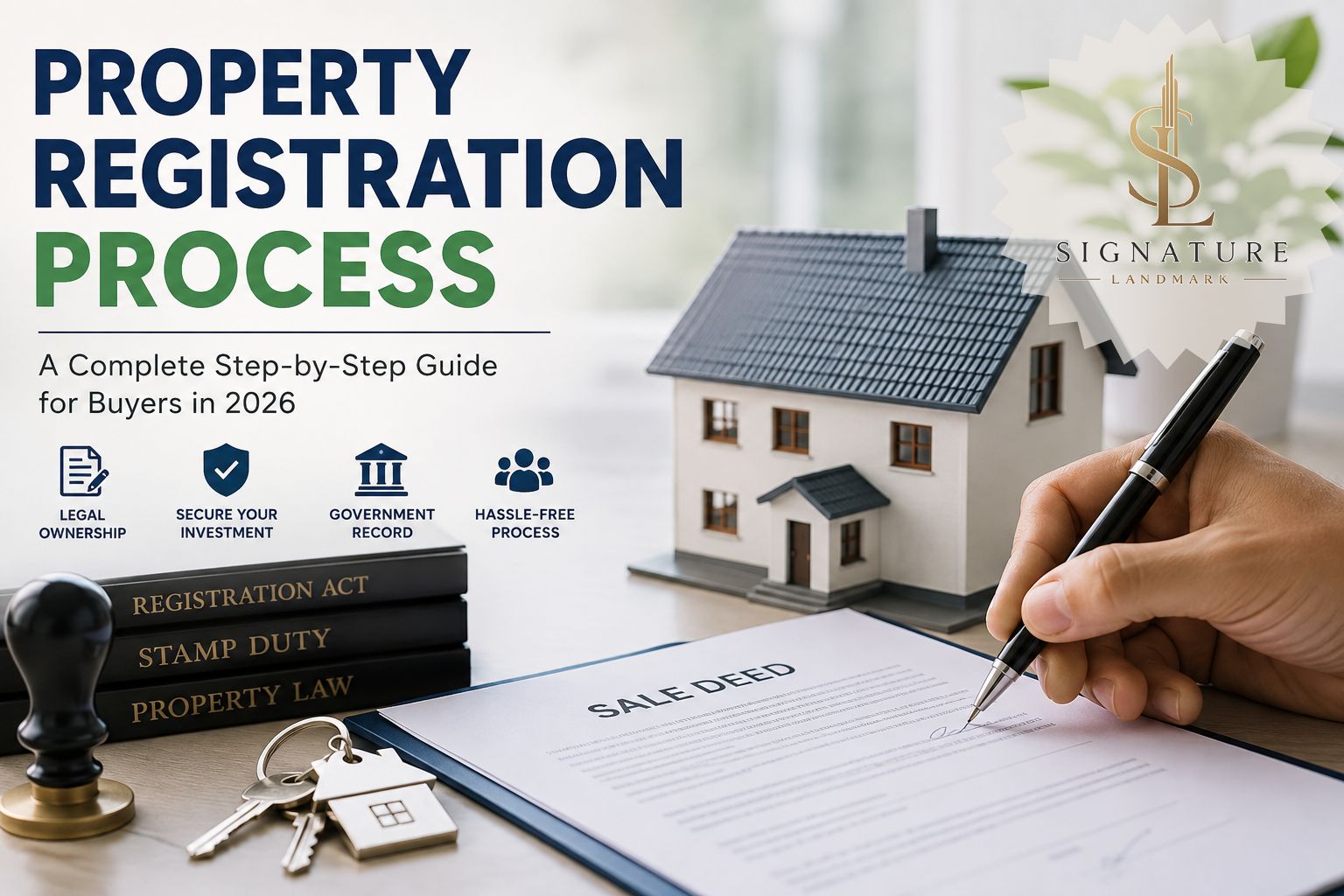

Buying a property is one of the biggest financial decisions in life. Whether you're purchasing a residential flat, commercial office, plot, or independent house, completing the property registration process is one of the most important legal steps. Property registration ensures that the ownership of the property is legally transferred from the seller to the buyer and recorded in government records.
In India, property registration is governed by the Registration Act, 1908, and the process is managed by the local Sub-Registrar Office (SRO). Understanding the registration process can help you avoid delays, legal issues, and unnecessary expenses.
What is Property Registration?
Property registration is the legal procedure of recording a property transaction with the government. Once the sale deed is registered, the buyer becomes the lawful owner of the property. Without registration, the sale is generally not legally valid for the transfer of ownership.
Registration protects both buyers and sellers by creating an official record of the transaction.
Why is Property Registration Important?
Registering your property offers several benefits:
- Establishes legal ownership of the property.
- Protects against fraud and ownership disputes.
- Creates an official government record.
- Makes it easier to obtain home loans.
- Simplifies future resale or inheritance.
- Increases buyer confidence in the property's legal status.
Documents Required for Property Registration
Before visiting the Sub-Registrar Office, ensure you have the following documents:
- Original Sale Deed
- Identity Proof (Aadhaar Card, PAN Card, Passport, etc.)
- Address Proof
- Passport-size photographs
- PAN Card of buyer and seller
- Property tax receipts
- Encumbrance Certificate
- Approved building plan (if applicable)
- Occupancy Certificate (for completed buildings)
- NOC from the builder or society (where required)
- Stamp duty payment receipt
- Power of Attorney (if applicable)
Different states may require additional documents, so always verify local requirements.
Step-by-Step Property Registration Process
Step 1: Verify Property Documents
Before making the purchase, verify all legal documents related to the property, including:
- Ownership history
- Title documents
- Encumbrance Certificate
- RERA registration (if applicable)
- Property tax records
- Building approvals
This step ensures the property has a clear legal title.
Step 2: Draft the Sale Deed
The sale deed is the most important legal document in the transaction. It contains:
- Buyer and seller details
- Property description
- Sale consideration
- Payment terms
- Rights and obligations
- Possession date
It is advisable to have the deed prepared or reviewed by a legal expert.
Step 3: Calculate Stamp Duty
Stamp duty is a government tax payable during property registration. The amount depends on:
- State government rules
- Property value
- Buyer category (male/female/joint ownership)
- Property location
Many states offer reduced stamp duty for women buyers.
Step 4: Pay Stamp Duty and Registration Charges
The buyer must pay the applicable
- Stamp Duty
- Registration Fees
- Additional local charges (if any)
Payment is usually made online through the state government's portal or via authorized banks.
Step 5: Book an Appointment at the Sub-Registrar Office
Many states now offer online appointment booking for property registration. Booking an appointment in advance helps reduce waiting time and speeds up the process.
Step 6: Visit the Sub-Registrar Office
On the appointment date, both buyer and seller must appear before the sub-registrar along with
- Original documents
- Identity proofs
- Two witnesses
- Stamp duty receipts
- Passport-size photographs
Biometric verification and photographs are generally captured during registration.
Step 7: Verification by the Registrar
The registrar verifies:
- Identity of parties
- Property documents
- Payment of stamp duty
- Authenticity of signatures
- Presence of witnesses
If everything is in order, the registrar approves the registration.
Step 8: Registration of the Sale Deed
After successful verification, the sale deed is officially registered and entered into government records. The buyer receives a registered copy of the document, either in physical or digital form, depending on state procedures.
Step 9: Mutation of Property
Registration transfers ownership legally, but mutation updates the property records in the local municipal authority or revenue department.
Mutation is necessary for:
- Property tax payments
- Utility transfers
- Future sale
- Government records
Common Mistakes to Avoid
Many buyers make avoidable mistakes during registration. Some common ones include:
- Not verifying property ownership.
- Ignoring pending loans or legal disputes.
- Paying without proper documentation.
- Not checking RERA registration.
- Underreporting the property value.
- Missing original documents on registration day.
- Delaying mutation after registration.
Taking professional legal advice can help avoid these issues.
Registration Charges in India
Registration charges vary by state and are usually calculated as a percentage of the property's market value or sale consideration. The total cost generally includes:
- Stamp Duty
- Registration Fee
- Document handling charges
- Scanning or miscellaneous charges
Always check the latest rates applicable in your state before finalizing the transaction.
Property Registration for Home Loan Buyers
If you're purchasing a property through a home loan:
- The bank verifies legal documents before loan approval.
- Registration usually takes place after the loan is sanctioned.
- The bank may retain the original property documents until the loan is repaid.
Ensure all loan-related documentation is completed before registration.
Digital Property Registration
Several Indian states now offer online services for:
- Stamp duty payment
- Appointment booking
- Document upload
- Registration status tracking
- Downloading registered documents
These digital services have made the registration process faster, more transparent, and convenient.
Final Thoughts
Property registration is much more than a legal formality—it is the foundation of secure property ownership. Completing the process correctly protects your investment, safeguards your legal rights, and provides peace of mind for years to come.
Before registering any property, carefully verify all legal documents, calculate applicable charges, and seek professional guidance whenever necessary. Whether you're buying your first home, investing in commercial property, or purchasing a plot, following the correct registration process will ensure a smooth and hassle-free transaction.
At Signature Landmark, we assist buyers with property verification, documentation guidance, and end-to-end support for residential, commercial, plot, and land transactions, making your property purchase safe, transparent, and stress-free.