
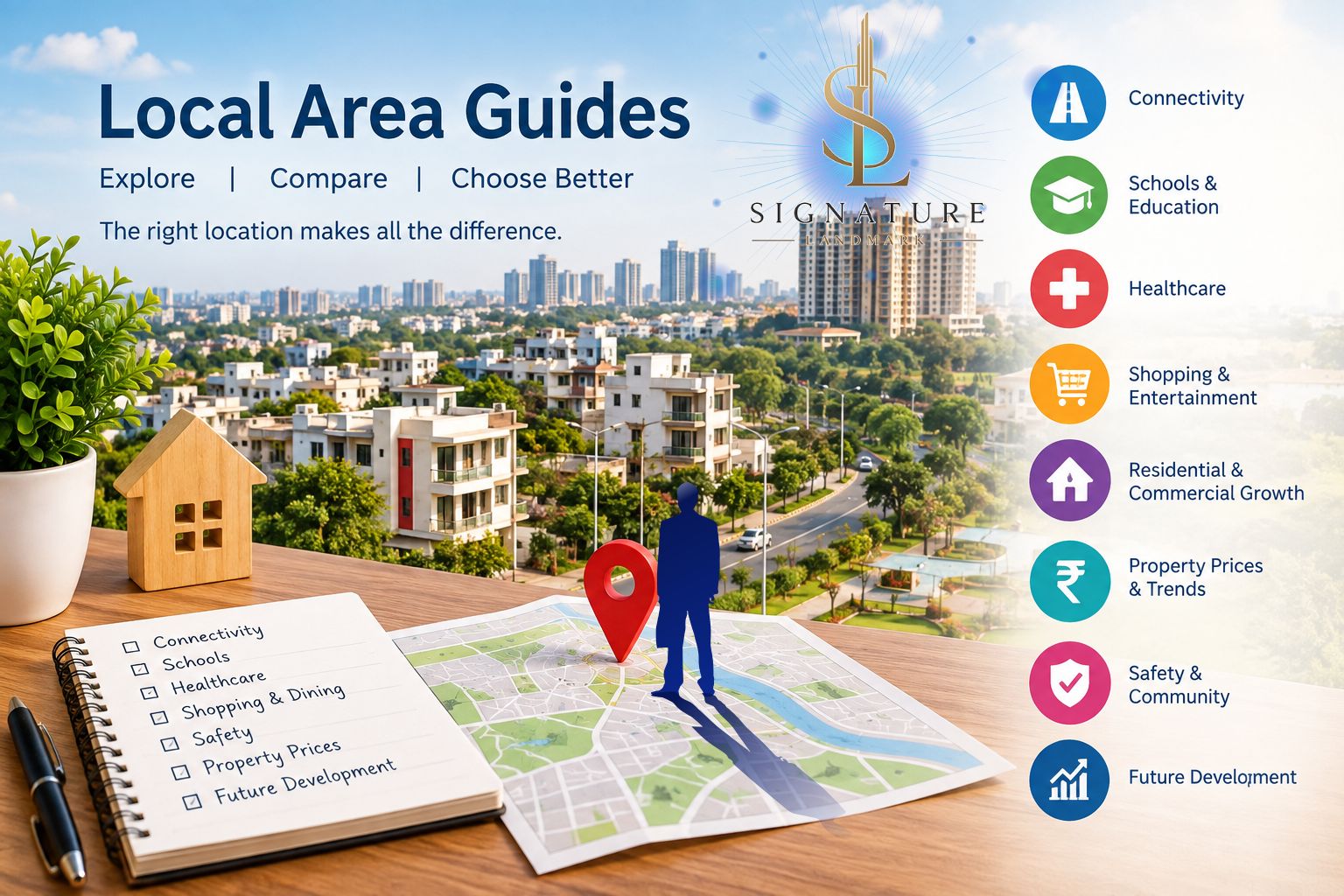

Choosing the right location is one of the most important decisions when buying or renting a property. A beautiful home can become less convenient if it is far from schools, workplaces, healthcare facilities, shopping centers, or public transport. This is why local area guides are valuable for homebuyers, investors, tenants, and anyone planning to move to a new neighborhood.
A good local area guide provides practical information about a locality, its connectivity, amenities, lifestyle, property market, and future development. It helps people understand not just the property but also the neighborhood they may call home.
What Is a Local Area Guide?
A local area guide is a detailed overview of a particular neighborhood, locality, or developing area. It generally covers important factors such as residential and commercial properties, transportation, schools, hospitals, shopping facilities, recreational spaces, restaurants, safety, and infrastructure.
For property buyers, these guides can make the initial research process easier. Instead of looking at property prices alone, buyers can evaluate the overall advantages and limitations of an area before making a decision.
Why Local Area Guides Are Important
Location plays a major role in property value and everyday convenience. Two properties with similar sizes and features can have very different prices because they are located in different neighborhoods.
A local area guide helps buyers understand:
- Connectivity to major roads and public transport
- Distance from schools and colleges
- Availability of hospitals and healthcare services
- Nearby shopping and entertainment options
- Residential and commercial development
- Local infrastructure and civic facilities
- Employment opportunities nearby
- Property price trends
- Future development possibilities
- Overall lifestyle and convenience
This information can help buyers make more informed property decisions.
Connectivity and Transportation
Good connectivity is one of the first things people should consider when evaluating a locality. Easy access to highways, major roads, railway stations, airports, metro networks, and public transportation can significantly improve daily convenience.
A well-connected area can also attract businesses and residential development. Improved connectivity may increase demand for properties over time, although buyers should evaluate actual infrastructure and confirmed projects rather than relying only on future-development claims.
When studying a locality, consider travel time to your workplace, schools, important commercial areas, and other frequently visited destinations.
Schools and Educational Facilities
Families with children should pay particular attention to educational facilities. A neighborhood with good schools and colleges nearby can make daily life more convenient.
Check the availability of:
- Schools for different age groups
- Colleges and universities
- Coaching and educational centers
- Day-care facilities
- Libraries and learning centers
It is also useful to check actual travel time during school and office hours rather than relying only on distance.
Healthcare Facilities
Access to healthcare is another essential factor when evaluating a locality. A well-developed neighborhood should ideally have clinics, pharmacies, diagnostic centers, and hospitals within a reasonable travelling distance.
When comparing areas, look at the availability of emergency medical services as well as routine healthcare facilities. For families, senior citizens, and individuals who regularly require medical services, this can be an important part of the property-buying decision.
Shopping, Food, and Entertainment
A convenient neighborhood should provide access to everyday shopping and lifestyle facilities. Local markets, supermarkets, shopping centers, restaurants, cafés, gyms, cinemas, and entertainment venues can contribute to a comfortable lifestyle.
However, buyers should consider whether these facilities are already operational or only proposed. Existing amenities provide immediate convenience, while planned developments may take time to become available.
Residential and Commercial Development
Local area guides should also provide an overview of the type of development taking place in the neighborhood.
Some locations are primarily residential, while others combine residential, commercial, and mixed-use developments. Areas with offices, retail spaces, educational institutions, and other businesses may attract more activity and employment opportunities.
For investors, understanding the development pattern can help in evaluating rental demand and long-term potential.
Property Prices and Market Trends
Property prices are an important part of any local area guide. Buyers should compare property prices across different projects, property types, and nearby localities.
Instead of focusing only on the cheapest option, consider factors such as
- Property size
- Construction quality
- Amenities
- Developer reputation
- Connectivity
- Maintenance costs
- Rental demand
- Future infrastructure
- Resale potential
It is also important to verify property-related information and compare multiple sources before making a financial decision.
Safety and Community Environment
A neighborhood's overall environment can strongly influence the quality of life. Buyers should observe factors such as street lighting, road conditions, security arrangements, traffic movement, cleanliness, and the general condition of surrounding areas.
Visiting the locality at different times of the day can provide a better understanding of noise levels, traffic, activity, and the overall atmosphere.
Future Development
Infrastructure projects and new developments can influence a locality's future. New roads, public transportation, educational institutions, commercial centers, and residential projects may increase convenience and demand.
However, buyers should distinguish between announced, approved, under-construction, and completed projects. Future development should be treated as a potential benefit rather than a guaranteed increase in property value.
How to Use Local Area Guides Before Buying
A local area guide should be used as a starting point for research rather than the only source of information. After identifying a promising locality, visit the area personally, compare properties, speak with residents when possible, verify documentation, and understand the applicable property regulations.
Create a simple checklist covering connectivity, education, healthcare, shopping, safety, infrastructure, property prices, and future development. Comparing several localities using the same checklist can make the decision much easier.
Conclusion
Local area guides provide valuable information for understanding a neighborhood beyond the property itself. They help buyers and investors evaluate connectivity, amenities, infrastructure, lifestyle, property trends, and future potential.
Whether you are searching for a home, considering an investment, or exploring a new neighborhood, researching the local area can help you make a more confident and practical decision. The right property is not only about the building—it is also about the location, accessibility, surrounding facilities, and quality of life it offers.