
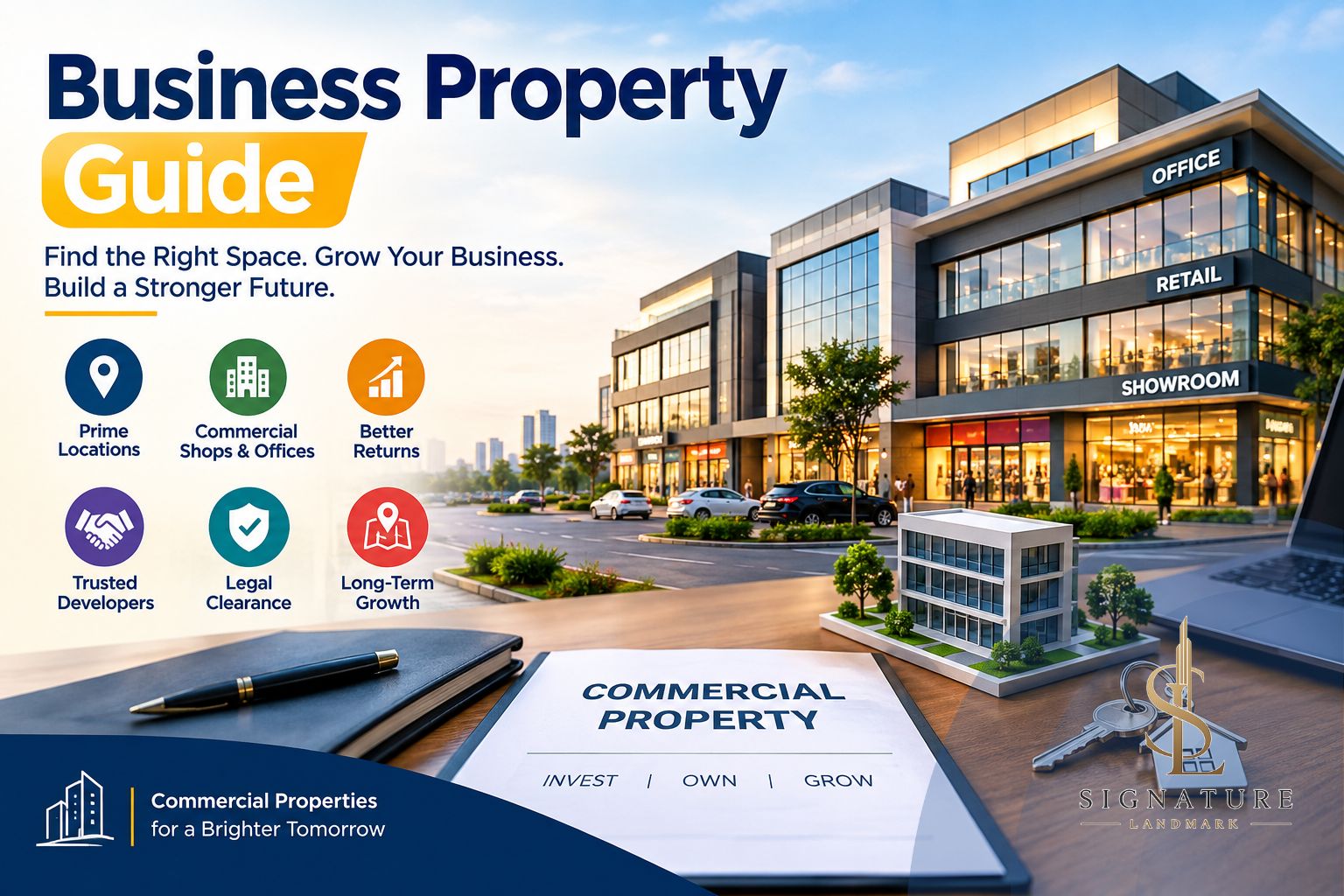

Business property can be an important part of a company’s growth strategy and a valuable real estate investment. Whether you are planning to purchase an office, retail shop, showroom, warehouse, or commercial space, choosing the right property requires careful planning. A suitable business property can improve accessibility, support business operations, attract customers, and potentially provide long-term value.
This business property guide explains the key factors you should consider before buying or investing in commercial real estate.
What Is Business Property?
Business property generally refers to real estate used for commercial or professional purposes. Unlike residential property, which is primarily designed for living, business properties are used to operate businesses and generate commercial income.
Common types include:
- Office spaces
- Retail shops
- Showrooms
- Warehouses
- Commercial buildings
- Industrial units
- Restaurants and hospitality spaces
- Commercial plots
The right property depends on your business model, target customers, budget, and future expansion plans.
1. Define Your Business Requirements
Before searching for a property, clearly identify what your business needs. Consider the number of employees, customer visits, storage requirements, equipment, parking, and expected business growth.
For example, a retail business may need high customer visibility, while a warehouse may require larger floor space and easy transportation access. An office may prioritize connectivity, employee convenience, meeting rooms, and nearby amenities.
Creating a requirement checklist can help you avoid spending money on features you do not actually need.
2. Choose the Right Location
Location is one of the most important factors in commercial property. A well-connected business location can make it easier for customers, employees, suppliers, and business partners to reach you.
Look for properties with access to:
- Main roads and highways
- Public transportation
- Metro or bus routes
- Residential areas
- Business districts
- Parking facilities
- Banks and essential services
For retail businesses, visibility and footfall may be especially important. For offices, accessibility and the surrounding business environment may have greater importance.
3. Understand Your Budget
Buying commercial property involves more than the property's purchase price. Prepare a complete budget that includes registration charges, taxes, legal expenses, renovation, interiors, maintenance, utilities, and other applicable costs.
If you are considering a property loan, compare financing options and understand the interest rate, repayment period, processing charges, and eligibility requirements.
A realistic budget helps you select a property without putting unnecessary pressure on your business finances.
4. Check the Property Documents
Documentation should be carefully reviewed before making a purchase decision. Important documents can include the title deed, sale deed, approved building plan, encumbrance certificate, property tax receipts, and occupancy-related documents where applicable.
For certain projects, RERA registration may also be relevant.
It is advisable to have the documents reviewed by a qualified property lawyer or professional before signing an agreement or making a significant payment.
5. Evaluate the Building and Infrastructure
The physical condition of a commercial property can significantly affect your future expenses. Inspect the building, electrical systems, plumbing, elevators, fire-safety arrangements, ventilation, parking, common areas, and other facilities.
Consider whether the property is suitable for your business operations today and whether it can accommodate future requirements.
A professional property inspection can help identify issues that may not be obvious during a normal visit.
6. Consider Customer and Employee Accessibility
A business property should be convenient for the people who use it. Customers may prefer locations that are easy to find and have sufficient parking or public transport access.
Employees may also value convenient commuting options, nearby food outlets, and essential services.
Good accessibility can contribute to a more practical and efficient working environment.
7. Compare Purchase and Rental Options
Buying is not always the only option. Depending on your business stage and financial position, renting commercial property may provide greater flexibility.
Buying may offer ownership and potential long-term value, while renting can require less upfront capital and make relocation easier if your business expands or changes direction.
Compare both options based on your business objectives, expected occupancy period, cash flow, and expansion plans.
8. Think About Future Growth
A business property should ideally support your long-term plans. Consider whether you may need additional employees, storage, meeting rooms, parking, or customer space in the future.
A property that works perfectly today may become restrictive after a few years. Evaluating future requirements before purchasing can help reduce the possibility of relocating later.
9. Understand Commercial Property Returns
Investors may purchase business properties to generate rental income or benefit from potential appreciation. However, returns are not guaranteed and can vary according to location, property quality, demand, tenant profile, vacancy, operating expenses, and broader market conditions.
Before investing, calculate expected rental income and account for maintenance, taxes, vacancy periods, financing costs, and other expenses.
10. Work With Property Professionals
Commercial property transactions can involve complex documentation, negotiations, financing, and legal checks. Working with experienced real estate professionals can help you understand the property and transaction more clearly.
A property consultant can assist with identifying suitable properties, while legal and financial professionals can help with documentation and financial evaluation.
Conclusion
Choosing a business property requires more than finding an attractive building. Location, accessibility, budget, documentation, infrastructure, business requirements, and future growth should all be considered before making a decision.
Whether you are purchasing an office, showroom, retail shop, warehouse, or commercial plot, careful research and professional due diligence can help you make a well-informed property decision. A business property should not only meet your current requirements but also support your business objectives over the long term.