
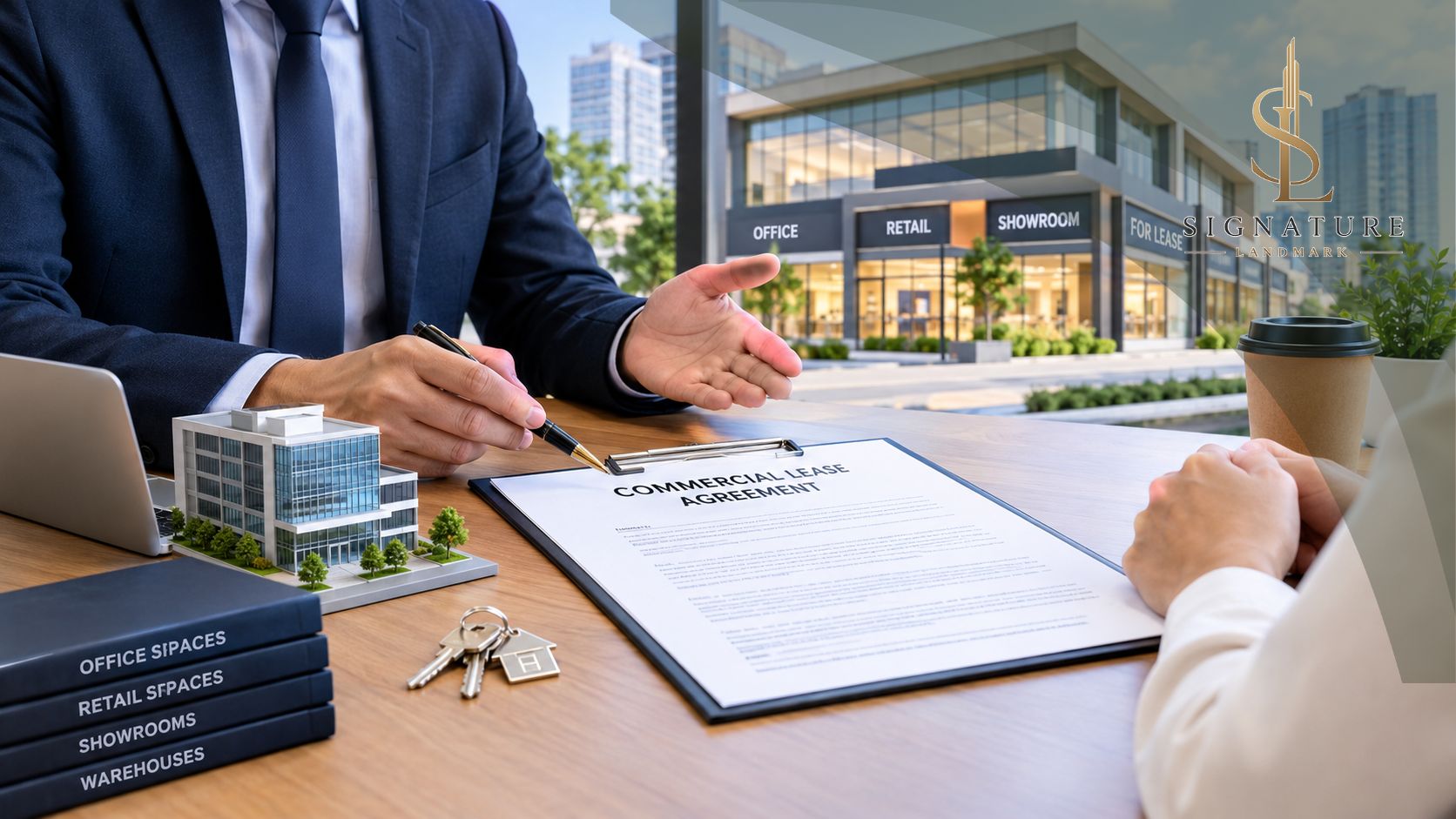

Commercial leasing is an important part of the real estate market, allowing businesses to use offices, retail shops, warehouses, showrooms, and other commercial spaces without purchasing the property. For businesses, leasing can provide flexibility and access to strategic locations, while property owners can generate regular rental income from their commercial assets.
Whether you are a business owner searching for the right premises or a property owner planning to lease your space, understanding the commercial leasing process can help you make informed decisions.
What Is Commercial Leasing?
Commercial leasing is a legal arrangement in which a property owner, known as the lessor, allows a business or individual, known as the lessee, to use a commercial property for an agreed period in exchange for rent.
Unlike residential rentals, commercial leases can involve more detailed terms related to rent escalation, security deposits, maintenance, permitted activities, utilities, fit-outs, taxes, and renewal conditions.
Common types of commercial properties available for lease include:
- Office spaces
- Retail shops
- Showrooms
- Warehouses
- Industrial units
- Restaurants and cafés
- Business centers
- Commercial buildings
Why Businesses Choose Commercial Leasing
One of the biggest advantages of leasing is that businesses do not need to invest a large amount of capital in purchasing property. Instead, they can allocate their funds toward inventory, employees, marketing, technology, and business expansion.
Leasing can also provide flexibility. A growing company may initially lease a smaller office and later move into a larger space as its requirements increase.
Location is another major consideration. A well-located commercial property can improve accessibility for customers, employees, suppliers, and business partners. Retail businesses, in particular, often look for locations with good visibility, pedestrian movement, parking, and connectivity.
Important Factors to Consider Before Leasing
Before signing a commercial lease, both parties should carefully evaluate the property and lease terms.
1. Location
Location can significantly influence the success of a commercial business. Consider road connectivity, public transportation, surrounding businesses, parking availability, customer accessibility, and future development in the area.
2. Rent and Security Deposit
Understand the monthly or annual rent and the amount of security deposit required. Businesses should also determine whether the rent includes maintenance charges or other expenses.
3. Lease Period
Commercial leases may have longer durations than residential agreements. Carefully consider the initial lease term, renewal options, lock-in period, and notice period.
4. Rent Escalation
Many commercial agreements include periodic rent increases. The lease should clearly mention when the increase will apply and how it will be calculated.
5. Maintenance and Operating Costs
Clarify responsibility for property maintenance, common-area maintenance, repairs, electricity, water, property taxes, and other operating expenses.
6. Permitted Use
The lease should specify how the property can be used. For example, an office space may have restrictions on manufacturing, restaurants, storage, or other activities.
The Commercial Leasing Process
The commercial leasing process generally begins with identifying the business's requirements. These may include the preferred location, property size, budget, parking requirements, amenities, and business activity.
After suitable properties are shortlisted, the tenant can inspect the premises and negotiate the commercial terms with the property owner.
The parties may then prepare a Letter of Intent (LOI) or similar document outlining the major agreed terms. After negotiations are completed, a formal lease agreement is prepared.
The agreement should clearly document important conditions such as rent, deposit, lease duration, escalation, maintenance responsibilities, termination provisions, renewal options, and permitted use.
Before signing, both parties should review the agreement carefully and obtain appropriate professional or legal advice where necessary.
Benefits for Property Owners
Commercial leasing can provide property owners with a regular source of rental income while allowing them to retain ownership of the property.
A well-maintained and strategically located commercial property may attract businesses looking for long-term premises. Selecting a suitable tenant and establishing clear contractual terms can help reduce misunderstandings during the tenancy.
Property owners should also consider the tenant's proposed business activity, lease requirements, maintenance responsibilities, and financial arrangements before finalizing an agreement.
Common Mistakes to Avoid
Businesses sometimes focus only on monthly rent and overlook other costs. Maintenance charges, utilities, taxes, fit-out expenses, parking fees, and rent escalation can significantly affect the total occupancy cost.
Another common mistake is failing to understand the lock-in and termination clauses. Businesses should know the consequences of ending the lease early.
Property owners should also avoid relying on verbal commitments. Important terms should be documented in the formal agreement.
Commercial Leasing and Location-Based Growth
The right commercial property can support a company's long-term growth. Businesses should consider not only their current requirements but also future expansion.
For example, an office may need additional workspace as the team grows, while a retail store may benefit from an area experiencing increasing residential development and improving connectivity.
This is why commercial leasing should be viewed as a strategic business decision rather than simply a property transaction.
Conclusion
Commercial leasing provides businesses with access to valuable commercial spaces without requiring them to purchase property. At the same time, it allows property owners to generate rental income from their assets.
A successful commercial lease depends on careful evaluation of the location, rent, lease duration, escalation, security deposit, maintenance costs, permitted use, and termination conditions. Clear documentation and proper due diligence can help both landlords and tenants establish a transparent and productive leasing relationship.
For businesses looking for commercial spaces or property owners seeking suitable tenants, professional real estate guidance can make the leasing process more organized and efficient.