
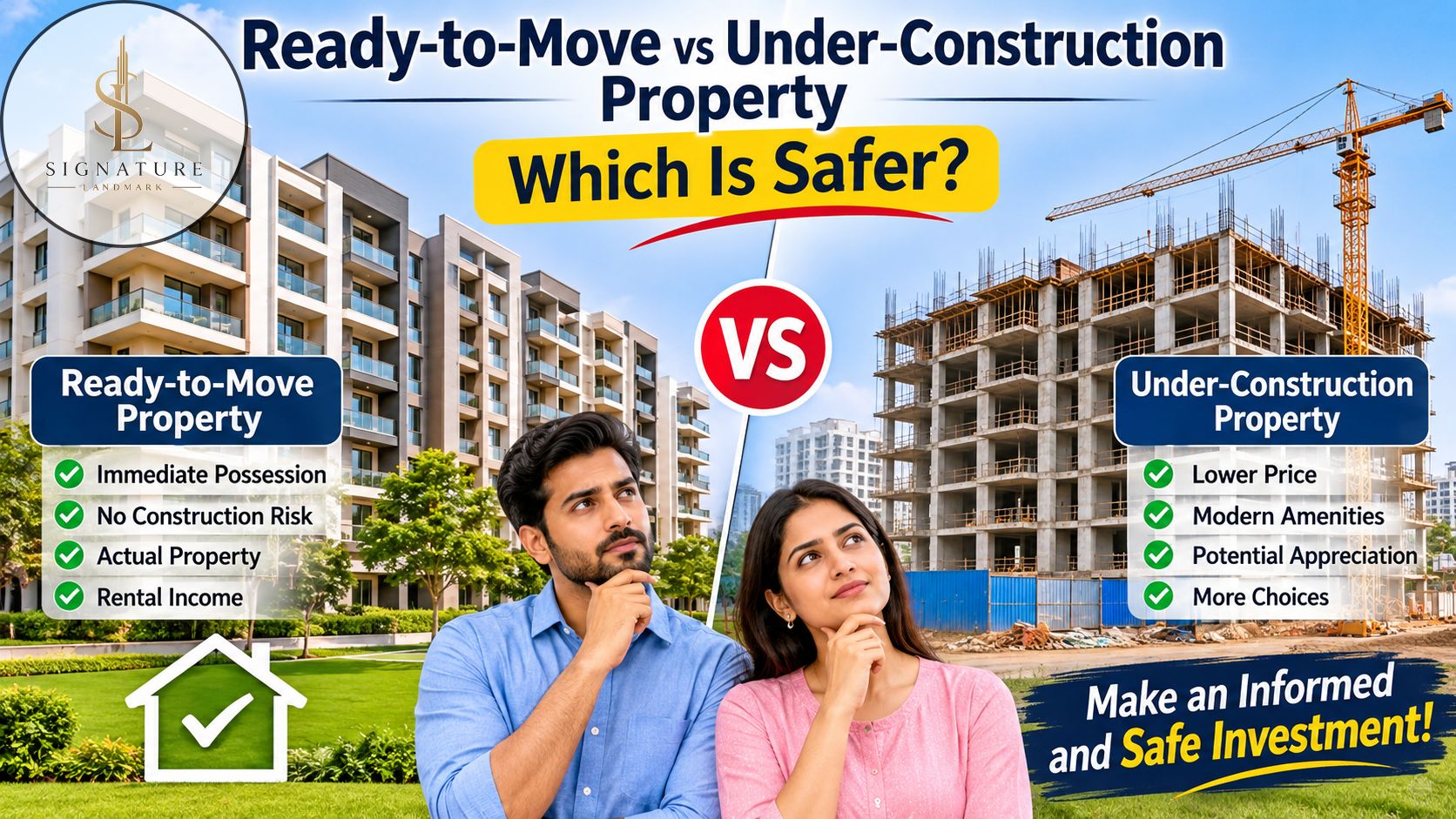

Buying a property is one of the biggest financial decisions in a person's life. Whether you are purchasing your first home, upgrading your lifestyle, or investing in real estate, choosing the right property is essential. However, one common question that buyers face is, "Should you invest in a ready-to-move property or an under-construction property?"
Both options have their own advantages and disadvantages. While ready-to-move properties offer immediate possession and greater certainty about the finished product, under-construction properties may provide attractive prices and potential appreciation. But when it comes to safety, financial security, and peace of mind, which option is better?
Let's understand the key differences.
1. What Is a Ready-to-Move Property?
A ready-to-move property is a residential or commercial property that has already been constructed and is available for immediate possession. Buyers can inspect the actual property, check the construction quality, and understand the surrounding infrastructure before making a purchase.
Advantages of Ready-to-Move Properties
- Immediate Possession: Buyers can move into the property immediately after completing the legal and financial formalities.
- No Construction Risk: There is no uncertainty regarding construction delays or incomplete development.
- What You See Is What You Get: Buyers can physically inspect the flat, building, amenities, parking, and overall construction quality.
- No Pre-EMI Burden: Since construction is complete, buyers generally start paying their regular home loan EMIs after disbursement.
- Rental Income: Investors can immediately rent out the property and start earning rental income.
Disadvantages of Ready-to-Move Properties
- The initial purchase price may be higher than that of an under-construction property.
- Buyers may have fewer customization options.
- Older properties may require additional maintenance or renovation.
- The choice of available units and locations may be limited.
2. What Is an Under-Construction Property?
An under-construction property is a residential or commercial project that is still being developed by a builder or developer. Buyers purchase the property before construction is completed, often based on approved plans, project specifications, and construction progress.
Advantages of Under-Construction Properties
- Lower Initial Price: These properties may be available at competitive prices compared to similar completed properties.
- Flexible Payment Plans: Developers may offer construction-linked or other payment schedules.
- Modern Amenities: New projects often include contemporary facilities, better layouts, and updated designs.
- Potential Appreciation: Property values may increase during the construction period, depending on market conditions and location development.
- More Choices: Buyers may have a wider selection of floors, layouts, and units during the early stages of a project.
Disadvantages of Under-Construction Properties
- Construction may be delayed due to financial, legal, or operational issues.
- The final quality may differ from buyers' expectations.
- Changes in project costs or specifications may create financial pressure.
- Buyers may need to manage rent and home loan payments simultaneously.
- There is a risk of disputes or incomplete development if the builder faces difficulties.
3. Ready-to-Move vs Under-Construction: Key Differences
| Factors | Ready-to-Move | Under-Construction |
|---|---|---|
| Possession | Immediate | After completion |
| Construction Risk | Very Low | Higher |
| Price | Generally higher | May be lower |
| Rental Income | Immediate possibility | After possession |
| Property Inspection | Actual property | Sample flat and plans |
| GST | Generally no GST on completed property, subject to conditions | Generally applicable |
| Customization | Limited | May be available |
| Investment Risk | Comparatively lower | Depends on builder and project |
4. Which Property Is Safer Financially?
From a financial perspective, ready-to-move properties generally offer greater certainty. Buyers know the final purchase price, can inspect the property, and can avoid uncertainties related to construction delays.
For example, suppose two similar apartments are available in the same location:
- Ready-to-move apartment: ₹65 lakh.
- Under-construction apartment: ₹55 lakh.
The under-construction property appears more affordable. However, buyers should also consider GST, rent during construction, loan interest, maintenance charges, registration expenses, and possible delays.
After calculating all expenses, the difference between the two properties may become smaller.
Therefore, buyers should compare the total acquisition cost rather than focusing only on the advertised property price.
5. Important Legal Checks Before Buying
Whether you choose a ready-to-move or under-construction property, legal verification is extremely important.
Here are some essential documents and checks:
For Ready-to-Move Properties:
- Registered Sale Deed and previous ownership documents.
- Occupancy Certificate (OC), where applicable.
- Completion Certificate, where applicable.
- Approved Building Plan.
- Encumbrance Certificate or appropriate title search.
- Property Tax Receipts.
- RERA details, where applicable.
For Under-Construction Properties:
- MahaRERA registration details, where applicable.
- Approved Building Plan and Layout.
- Land Title and Ownership Documents.
- Commencement Certificate, where applicable.
- Builder-Buyer Agreement or Agreement for Sale.
- Project Completion Timeline.
- Details of approvals and permissions.
Buyers should verify project registration and disclosures on the official MahaRERA website and seek independent legal advice before signing any agreement.
6. Which Option Is Better for Nagpur Property Buyers?
Nagpur is witnessing development across residential and commercial real estate markets. Areas connected to major roads, industrial zones, educational institutions, healthcare facilities, and upcoming infrastructure developments are attracting property buyers.
For people planning to purchase a home in Nagpur, ready-to-move properties can be suitable for families looking for immediate possession and reduced construction uncertainty.
On the other hand, under-construction properties may appeal to investors and buyers who have a longer investment horizon and are comfortable waiting for possession.
Before investing, carefully evaluate the location, builder reputation, connectivity, nearby facilities, project approvals, and future development potential.
7. Tips to Make a Safe Property Investment
Regardless of the property type, following these practical tips can help reduce investment risks:
- Research the builder's previous projects and delivery record.
- Verify property ownership and legal approvals.
- Check RERA registration and project details.
- Compare prices with similar properties in the area.
- Calculate all additional expenses before finalizing your budget.
- Visit the project location personally.
- Read the agreement carefully before making payments.
- Consult a qualified property lawyer for legal verification.
Never make a property purchase decision based only on attractive discounts, advertisements, or promises of future returns.
Conclusion: Ready-to-Move or Under-Construction—Which Is Safer?
When it comes to safety, ready-to-move properties generally have an advantage because construction is complete, possession is immediate, and buyers can inspect the actual property before purchasing.
However, under-construction properties can also be a good investment when purchased from a reputed developer with verified approvals, valid RERA registration, and a reliable construction track record.
The right choice ultimately depends on your financial situation, investment goals, risk tolerance, and possession requirements.
If your priority is immediate possession and lower construction-related risk, a ready-to-move property may be the better choice. If you have a longer investment horizon and are comfortable managing construction-related uncertainties, an under-construction property may be worth considering.
At Signature Landmark, we believe that a smart property investment begins with the right information, proper research, and informed decision-making.
Make your next property investment a confident one with Signature Landmark.