
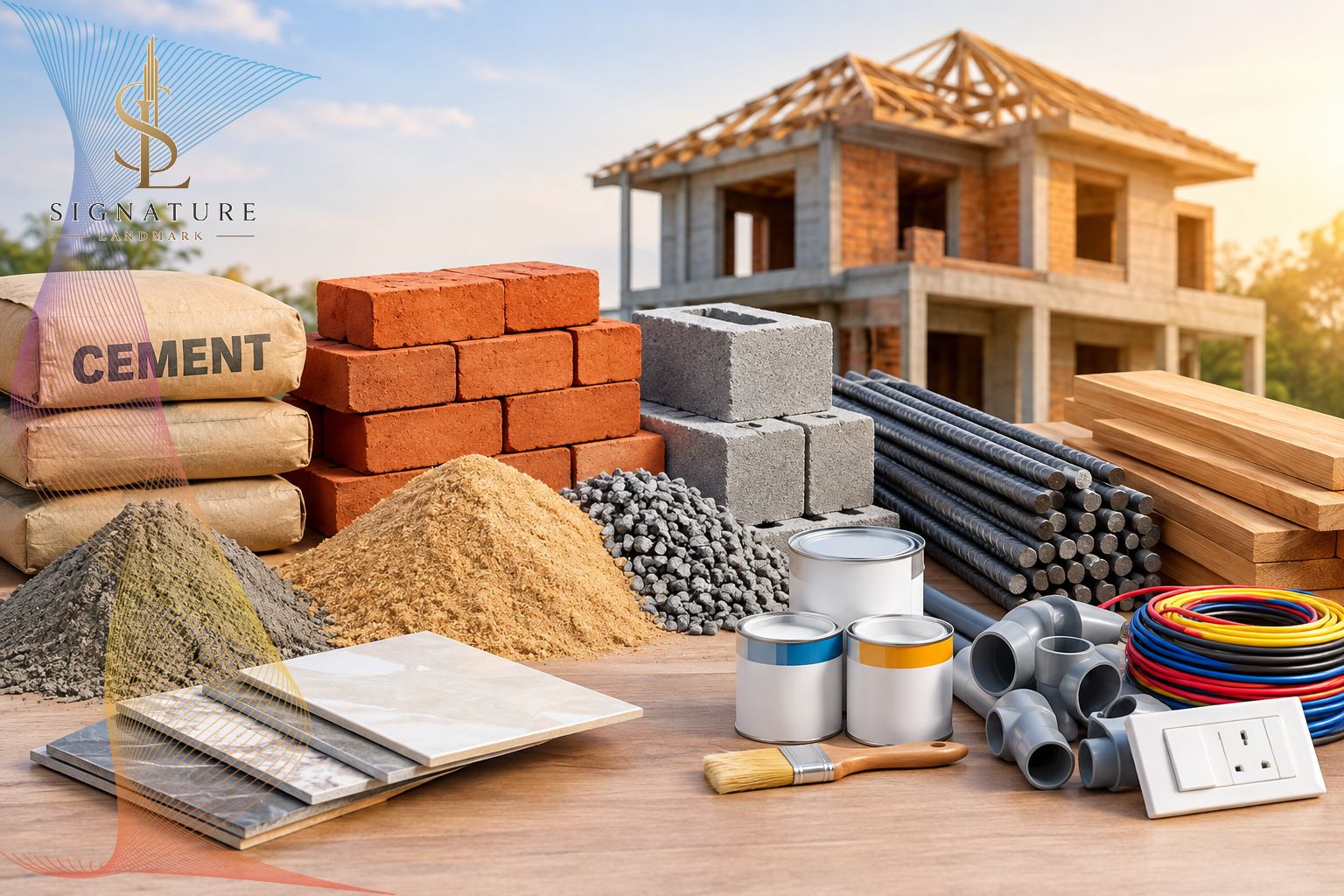

Building a home is one of the biggest investments a person makes. From the foundation to the finishing touches, every part of a building depends on the quality and suitability of the materials used. Choosing the right building materials can improve the strength, safety, durability, energy efficiency, appearance, and long-term value of a property.
Whether you are constructing a new home, purchasing a property, or planning a renovation, understanding the basic building materials can help you make better decisions. This guide explains the most commonly used construction materials and what you should consider before selecting them.
1. Cement
Cement is one of the most important materials used in construction. It acts as a binding material in concrete, mortar, plaster, and other construction applications.
Different grades and types of cement are available for different purposes. Ordinary Portland Cement (OPC), Portland Pozzolana Cement (PPC), and Portland Slag Cement (PSC) are commonly used in construction.
When purchasing cement, check the manufacturing date, packaging condition, and quality standards. Cement should be stored in a dry place because moisture can reduce its effectiveness.
2. Sand
Sand is used in concrete, mortar, plastering, and brickwork. The quality of sand can directly affect the strength and finish of construction.
Fine sand is commonly used for plastering, while coarser sand is generally suitable for concrete and masonry work. The sand should be clean and free from excessive clay, silt, organic matter, and other impurities.
Choosing the correct type and quality of sand is important for achieving strong and durable construction.
3. Bricks and Blocks
Bricks and blocks are used to construct walls and partitions. Traditional clay bricks remain popular, while concrete blocks, fly-ash bricks, and AAC (Autoclaved Aerated Concrete) blocks are also widely used.
AAC blocks are lightweight and can help reduce the overall load on a building. They also provide useful insulation properties. Traditional bricks, meanwhile, are well known for their durability and widespread availability.
The right choice depends on factors such as structural requirements, local climate, construction method, budget, and availability.
4. Steel
Steel provides strength and reinforcement to concrete structures. Reinforced steel bars, commonly known as TMT bars, are extensively used in columns, beams, slabs, and foundations.
When selecting reinforcement steel, quality and specifications are extremely important. Using appropriate-grade steel and following the structural engineer's design helps ensure the safety and stability of the building.
Steel should also be stored properly to minimize excessive rust and contamination.
5. Concrete
Concrete is a fundamental construction material made from cement, aggregates, sand, and water. It is used for foundations, columns, beams, slabs, roads, and many other structural components.
Concrete strength is commonly specified through grades such as M20, M25, M30, and others. The appropriate grade should be selected according to the structural design rather than simply choosing the strongest option.
Proper mixing, placement, compaction, and curing are essential for achieving the desired strength and durability.
6. Wood
Wood is commonly used for doors, windows, furniture, flooring, ceilings, and interior elements. Different varieties of natural wood and engineered wood products are available.
When selecting wood, consider durability, moisture resistance, maintenance requirements, appearance, and intended use. For areas exposed to moisture or changing weather conditions, suitable treated or engineered products may offer better performance.
7. Tiles and Flooring Materials
Tiles play both a functional and aesthetic role in a property. Ceramic, vitrified, porcelain, natural stone, and other flooring materials are available in a wide range of designs and price points.
For living rooms and bedrooms, homeowners often focus on appearance and comfort. For kitchens and bathrooms, water resistance, slip resistance, and ease of cleaning are particularly important.
Outdoor areas require materials designed to withstand weather and frequent use.
8. Glass
Glass is increasingly used in modern homes for windows, doors, partitions, balconies, facades, and decorative features. Options include clear, tinted, laminated, tempered, and double-glazed glass.
Safety should always be considered when selecting glass, especially for balconies, large windows, doors, and other vulnerable locations. Energy-efficient glazing can also help improve indoor comfort in suitable climates.
9. Paint and Finishing Materials
Paint protects surfaces while improving the appearance of a property. Interior and exterior paints are formulated for different conditions.
Exterior paint should be able to withstand sunlight, rain, humidity, and temperature changes. Interior paint selection can depend on factors such as washability, finish, durability, and room usage.
Before painting, proper surface preparation, priming, and application are important for achieving a long-lasting finish.
10. Plumbing and Electrical Materials
Good-quality plumbing and electrical materials are essential for the safety and functionality of a building. Pipes, fittings, wires, switches, sockets, circuit breakers, and distribution boards should meet appropriate quality and safety requirements.
Electrical systems should be designed and installed by qualified professionals. Similarly, plumbing materials should be selected according to water pressure, temperature, location, and intended application.
Factors to Consider When Choosing Building Materials
Before purchasing construction materials, consider these important factors:
- Quality: Choose materials that meet relevant standards and specifications.
- Durability: Consider the expected lifespan and maintenance requirements.
- Climate: Local weather conditions can influence material selection.
- Budget: Compare initial cost with long-term maintenance and replacement costs.
- Availability: Locally available materials can reduce transportation costs and delays.
- Sustainability: Consider energy-efficient, recycled, or locally sourced materials where practical.
- Professional advice: Follow the recommendations of architects, engineers, and qualified contractors.
Conclusion
Selecting the right building materials is an important part of creating a safe, durable, and comfortable property. Cement, sand, bricks, steel, concrete, wood, tiles, glass, paint, plumbing, and electrical materials all contribute to the overall performance of a building.
Instead of choosing materials based only on price or appearance, homeowners should consider quality, durability, safety, maintenance, climate, and long-term value. Professional guidance can also help ensure that materials are appropriate for the building's structural and functional requirements.
For anyone planning to construct or purchase a property, a basic understanding of building materials can make the decision-making process easier and help avoid unnecessary costs in the future.