
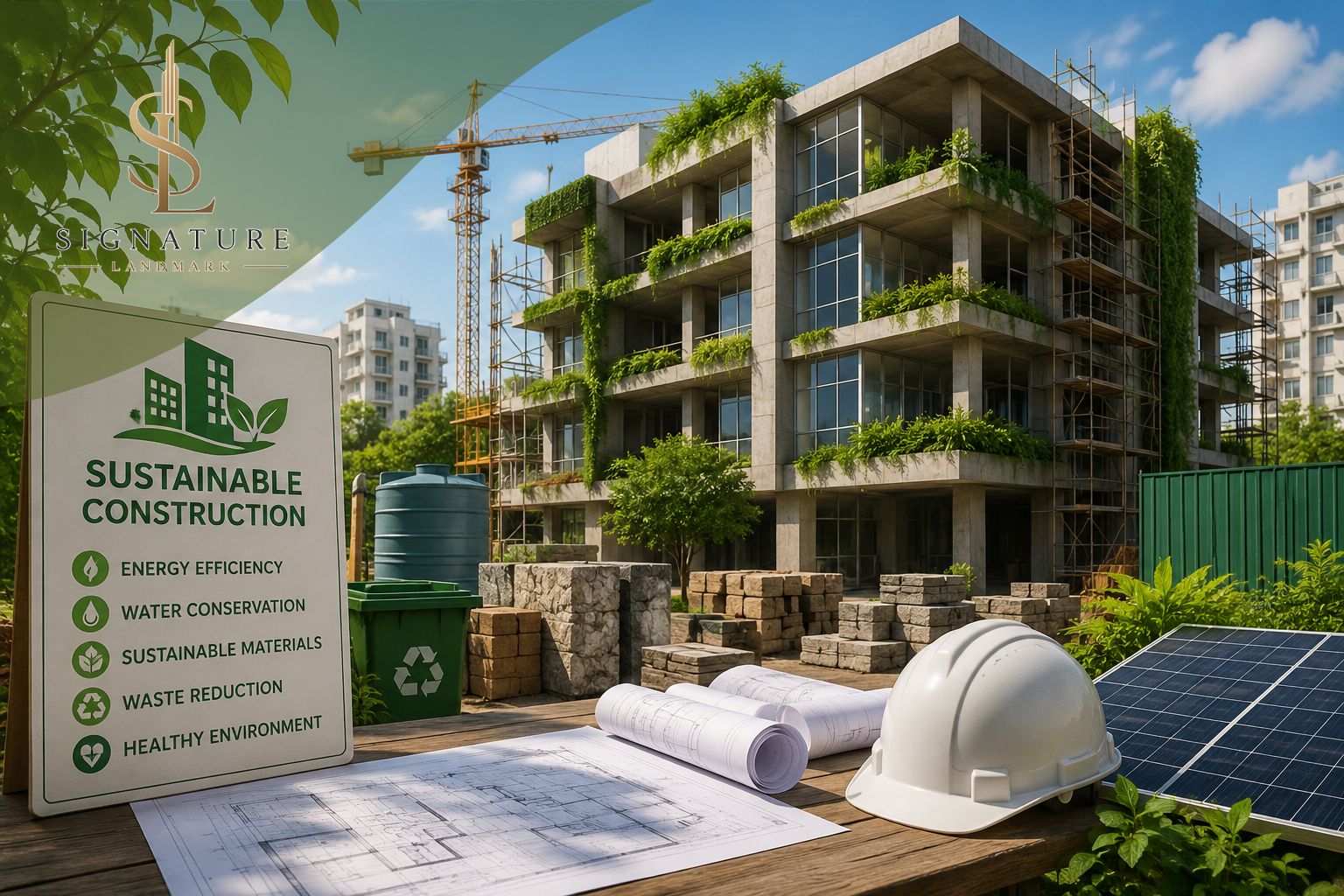

Sustainable construction is becoming an important part of the modern real estate and building industry. As cities grow and the demand for homes, offices, shopping spaces, and infrastructure increases, construction must become more environmentally responsible. Sustainable construction focuses on reducing the negative impact of buildings on the environment while creating healthy, comfortable, and energy-efficient spaces for people.
From the materials used during construction to the energy consumed after a building is completed, sustainability considers the entire life cycle of a property. For homeowners, developers, investors, and architects, adopting sustainable construction practices can provide both environmental and financial benefits.
What Is Sustainable Construction?
Sustainable construction means planning, designing, constructing, and operating buildings in a way that minimizes environmental impact and uses resources efficiently. It focuses on reducing waste, conserving energy and water, using environmentally friendly materials, and improving the overall efficiency of buildings.
Unlike traditional construction, which may focus mainly on cost and speed, sustainable construction considers long-term environmental, economic, and social factors.
Why Is Sustainable Construction Important?
The construction and operation of buildings require significant amounts of energy, water, raw materials, and other resources. Poorly planned construction can also generate large quantities of waste and contribute to pollution.
Sustainable construction can help address these challenges by encouraging responsible use of natural resources. Energy-efficient buildings can reduce electricity consumption, while water-saving systems can lower water usage. Better material selection can also reduce waste and environmental damage.
For growing cities such as Nagpur and other developing urban areas, sustainable construction can support healthier and more efficient urban development.
Key Features of Sustainable Construction
1. Energy Efficiency
Energy efficiency is one of the most important elements of sustainable construction. Buildings can be designed to use less electricity through natural lighting, proper ventilation, energy-efficient appliances, LED lighting, and improved insulation.
Solar panels can also be installed to generate renewable energy. Although the initial investment may be higher, energy-efficient systems can help reduce electricity expenses over the long term.
2. Eco-Friendly Building Materials
Choosing sustainable materials can reduce the environmental impact of construction. Materials such as recycled steel, reclaimed wood, bamboo, fly-ash bricks, and certain recycled products can be considered depending on the project requirements.
Locally available materials can also reduce transportation requirements and associated emissions. Builders should consider durability, maintenance requirements, recyclability, and environmental impact when selecting materials.
3. Water Conservation
Water conservation is another important aspect of sustainable buildings. Rainwater harvesting systems can collect and store rainwater for suitable applications. Low-flow taps, efficient toilets, water-saving fixtures, and wastewater treatment systems can further reduce water consumption.
Landscaping can also use native or drought-resistant plants that require less water.
4. Waste Reduction
Construction sites can generate substantial amounts of waste. Sustainable construction aims to reduce waste through careful planning, accurate material measurements, recycling, and reuse.
Construction materials that cannot be reused should be properly segregated and sent for recycling or responsible disposal wherever possible.
5. Natural Lighting and Ventilation
Good building design can reduce dependence on artificial lighting and mechanical cooling. Large windows, suitable building orientation, shading systems, courtyards, and proper ventilation can improve indoor comfort while reducing energy consumption.
Natural light can also make residential and commercial spaces feel more open and comfortable.
Benefits of Sustainable Construction
Sustainable construction offers several long-term advantages. One major benefit is reduced operating costs. Energy-efficient lighting, appliances, insulation, and renewable energy systems can lower electricity consumption.
Water-saving systems can also reduce utility expenses. Additionally, durable and high-quality materials may reduce maintenance and replacement costs.
Sustainable buildings can also provide healthier indoor environments. Better ventilation, natural lighting, and responsible material choices can contribute to improved occupant comfort.
From an investment perspective, properties with modern energy-efficient features may become increasingly attractive to environmentally conscious buyers and tenants. Sustainable features can also improve a property's long-term value and market appeal.
Role of Technology in Sustainable Construction
Technology is transforming the way sustainable buildings are designed and managed. Building Information Modeling (BIM) can help architects and engineers plan projects more efficiently and identify potential problems before construction begins.
Smart building systems can monitor electricity, lighting, temperature, and water usage. Sensors and automated controls can adjust systems according to actual requirements, helping reduce unnecessary consumption.
Renewable energy technologies, energy-efficient equipment, and modern construction techniques are also making sustainable buildings more practical.
Challenges of Sustainable Construction
Despite its advantages, sustainable construction has some challenges. Initial construction costs can sometimes be higher because of advanced technologies, specialized materials, and energy-efficient equipment.
There may also be limited awareness among buyers and developers about the long-term benefits. Availability of sustainable materials and skilled professionals can vary by location.
However, as technology improves and awareness increases, sustainable construction is becoming more accessible. Government policies, incentives, and growing consumer demand can further encourage sustainable development.
The Future of Sustainable Construction
The future of construction is likely to focus increasingly on energy efficiency, renewable energy, smart technology, responsible materials, and climate-conscious design. Developers will need to consider not only how quickly a building can be constructed but also how efficiently it performs throughout its lifetime.
Green buildings, solar-powered properties, rainwater harvesting, efficient waste management, and smart energy systems can become more common in residential and commercial developments.
Conclusion
Sustainable construction is more than just an environmental trend—it is an approach to creating better buildings for the future. By reducing energy and water consumption, minimizing waste, choosing responsible materials, and incorporating efficient technologies, developers can create properties that are environmentally responsible and economically practical.
For homebuyers and investors, sustainable features can provide comfort, lower operating costs, and potential long-term value. As the real estate industry continues to evolve, sustainable construction can play an important role in creating healthier communities and a greener future.