
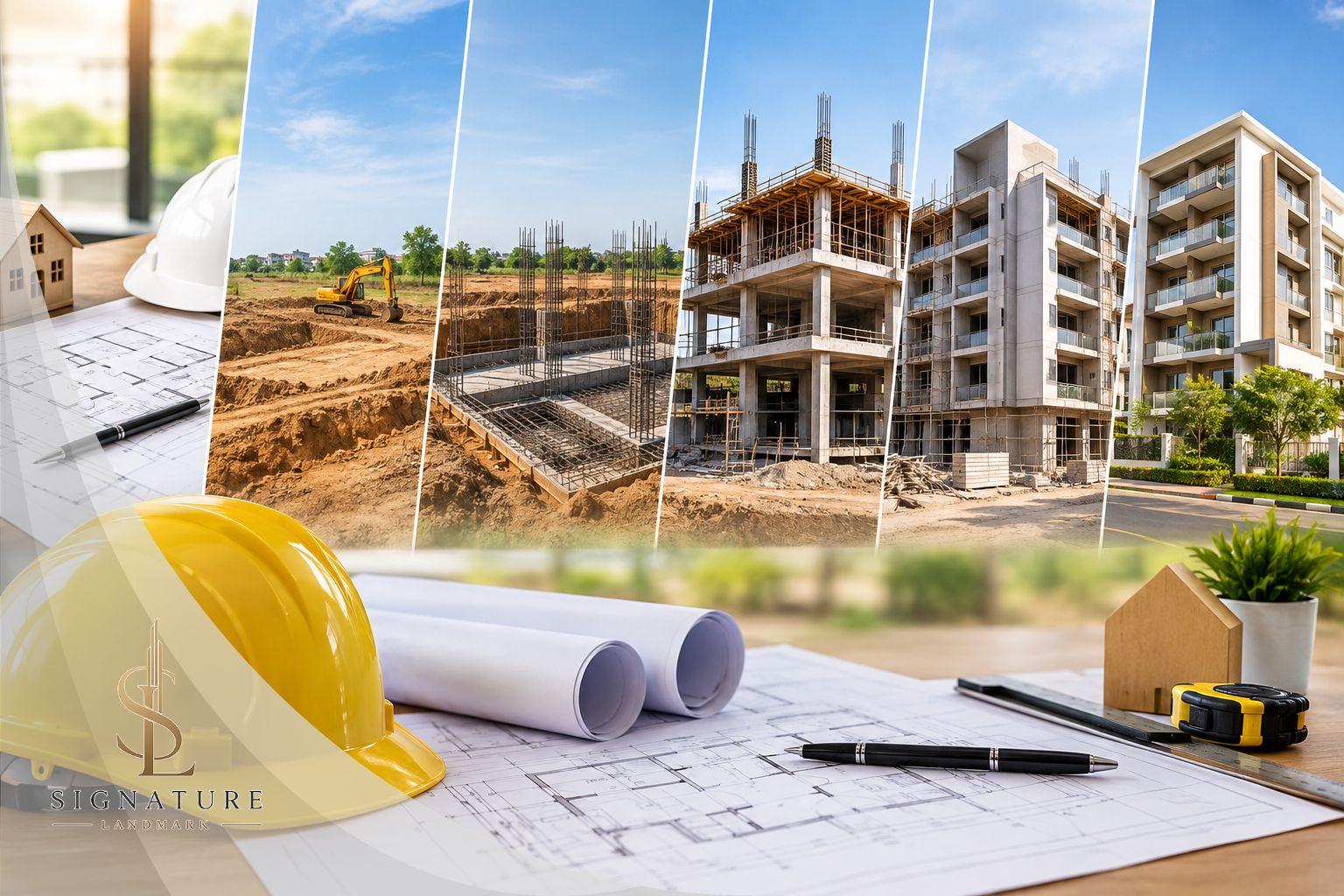

Building a property is a major investment that requires proper planning, coordination, and patience. Whether you are constructing a residential home, apartment building, commercial property, or other real estate project, understanding the construction timeline helps you plan your budget, finances, and expectations more effectively.
A construction project does not happen overnight. It generally moves through several stages, starting with planning and approvals and ending with final inspection and handover. The exact duration depends on the size of the project, location, design, weather, availability of materials, labor, approvals, and other factors.
1. Planning and Pre-Construction
The first stage of construction is planning. Before any physical work begins, the property owner or developer needs to determine the project's requirements, budget, design, and expected completion date.
This stage may include selecting a suitable plot, preparing architectural drawings, estimating construction costs, arranging finance, and selecting architects, engineers, contractors, and other professionals.
Proper planning can prevent expensive changes and delays later in the project.
2. Approvals and Documentation
Obtaining the necessary permissions is an important part of the construction timeline. Depending on the project and location, approvals may be required from local authorities and other relevant departments.
Building plans, land documents, development permissions, environmental requirements, and other approvals may need to be completed before construction begins.
For larger real estate projects, regulatory requirements can be more extensive. Developers should ensure that all required approvals and registrations are properly completed before starting construction.
3. Site Preparation
Once planning and approvals are in place, the construction site is prepared. This can include clearing the land, removing unwanted materials, levelling the site, arranging temporary utilities, and marking the building layout.
The foundation area is then prepared according to the structural design.
The duration of this stage depends on the size and condition of the site. A relatively clear and level plot may require less preparation than a difficult or uneven site.
4. Foundation Work
The foundation is one of the most important stages of construction because it supports the entire structure. Excavation is carried out according to the approved structural design, followed by reinforcement, footing work, and concrete placement.
The foundation must be constructed carefully because structural problems at this stage can affect the safety and durability of the entire building.
The timeline may vary depending on soil conditions, building size, foundation type, and weather conditions.
5. Structural Construction
After the foundation is completed, the main structure of the building begins to take shape. This stage can include columns, beams, slabs, walls, staircases, and other structural elements.
For multi-story buildings, construction proceeds floor by floor. The time required depends on the number of floors, construction method, labor availability, and project management.
Regular quality checks during this stage are important to ensure that construction follows the approved drawings and structural specifications.
6. Electrical and Plumbing Work
Electrical and plumbing systems are generally installed during the appropriate stages of structural and finishing work. Pipes, wiring, drainage systems, water supply lines, and other services need to be carefully planned.
Proper coordination between civil, electrical, and plumbing teams helps prevent rework and unnecessary delays.
7. Interior and Exterior Finishing
Once the main structure and essential services are completed, finishing work begins. This may include plastering, flooring, painting, doors, windows, kitchen work, bathroom fittings, electrical fixtures, and other interior elements.
External work may include façade finishing, compound walls, landscaping, pathways, parking areas, and other common facilities.
The finishing stage can take considerable time because several teams may be working simultaneously.
8. Inspection and Quality Checks
Before the property is handed over, inspections and quality checks are carried out. The construction team checks structural elements, electrical systems, plumbing, waterproofing, flooring, doors, windows, fittings, and other important components.
Any defects or incomplete work should be identified and corrected before final handover.
For buyers purchasing a new property, a final inspection or property walkthrough can be useful for identifying issues that need attention.
9. Final Approvals and Handover
The final stage involves completing applicable documentation, inspections, and approvals required for occupancy or possession.
Once the project is ready and the necessary formalities are completed, possession can be handed over to the owner or buyer.
For apartment and commercial projects, common-area facilities and infrastructure should also be checked before handover.
How Long Does Construction Take?
There is no single construction timeline that applies to every project. A small residential house may take several months, while a large residential or commercial development can take considerably longer.
Some common factors affecting the timeline include:
- Size and complexity of the project
- Weather conditions
- Availability of labor
- Material supply and transportation
- Government approvals
- Changes in design
- Budget and cash-flow availability
- Contractor performance
- Site conditions
- Quality-control requirements
Good project management can help reduce avoidable delays and keep construction progressing according to schedule.
Conclusion
Understanding the construction timeline gives property owners and buyers a clearer idea of what happens at each stage of development. From planning and approvals to foundation work, structural construction, finishing, inspections, and handover, every stage plays an important role in delivering a safe and quality property.
A realistic construction schedule should always include some flexibility because unexpected issues can arise during the project. Proper planning, professional supervision, quality materials, timely approvals, and effective communication can significantly improve the chances of completing a project successfully.
If you are planning to buy, sell, or invest in residential or commercial property, Signature Landmark can help you make informed real estate decisions with a practical and professional approach.