
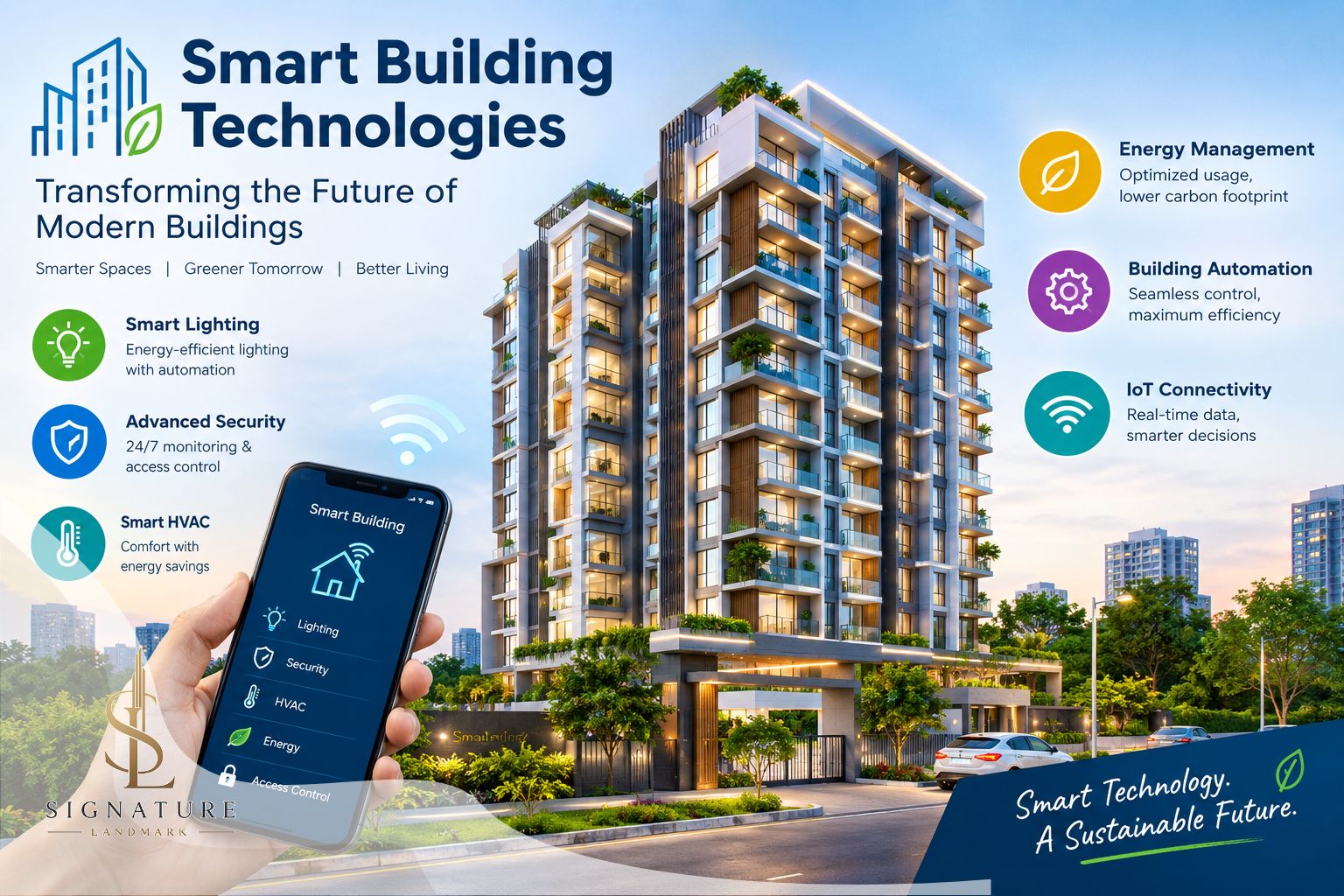

Smart building technologies are changing the way residential, commercial, and mixed-use properties are designed, constructed, managed, and experienced. A smart building uses connected devices, sensors, automation systems, and data to make buildings more efficient, comfortable, secure, and sustainable.
As property owners and buyers increasingly look for modern amenities and lower operating costs, smart technologies are becoming an important part of real estate development. From automated lighting to intelligent security systems, these solutions can improve everyday life while increasing the long-term value of a property.
What Are Smart Building Technologies?
Smart building technologies refer to systems that use sensors, software, connectivity, and automation to monitor and control different building functions. These systems can collect real-time information and respond automatically to changing conditions.
For example, sensors can detect when a room is occupied and adjust lighting or air conditioning accordingly. Security cameras and smart access-control systems can monitor entrances, while energy-management systems can track electricity consumption.
The main objective is to create a building that can operate more intelligently with less manual intervention.
1. Smart Energy Management
Energy efficiency is one of the biggest advantages of smart buildings. Intelligent energy-management systems can monitor electricity usage and identify areas where energy is being wasted.
Smart lighting can automatically switch lights on or off based on occupancy and natural daylight. Smart thermostats and HVAC controls can adjust temperature according to room usage and weather conditions.
For commercial buildings, these technologies can significantly improve energy management and help reduce unnecessary operating expenses.
2. Intelligent Security Systems
Security is an essential part of modern property management. Smart buildings can combine CCTV cameras, video monitoring, smart locks, access-control systems, alarms, and visitor-management solutions.
Biometric access, digital entry systems, and smart cards can help control who enters specific areas. Property managers can also receive alerts about unusual activity or unauthorized access.
For residential communities, intelligent security can provide residents with greater convenience while supporting overall safety and property management.
3. Smart Lighting
Smart lighting systems allow lights to be controlled automatically or remotely. Motion sensors can detect occupancy and turn lights on when needed, while timers and daylight sensors can reduce unnecessary usage.
Residents and building managers can often control lighting through mobile applications or centralized systems. Smart lighting can also improve the atmosphere of common areas, offices, parking spaces, and outdoor landscapes.
4. Smart HVAC and Indoor Climate Control
Heating, ventilation, and air-conditioning systems account for a substantial portion of energy consumption in many buildings. Smart HVAC technology helps optimize temperature, airflow, and ventilation.
Sensors can monitor occupancy, temperature, humidity, and air quality. The system can then adjust settings according to actual requirements.
This approach can improve indoor comfort while helping buildings use energy more efficiently.
5. IoT and Connected Devices
The Internet of Things, or IoT, is at the heart of many smart buildings. IoT devices can communicate with one another through connected networks.
For example, a smart building may connect lighting, elevators, security systems, HVAC equipment, water meters, and energy-management systems to a centralized platform.
The collected data can help property managers understand how a building is being used and identify opportunities for improvement.
6. Smart Water Management
Water conservation is becoming increasingly important in modern property development. Smart water meters and leak-detection sensors can monitor consumption and identify unusual water usage.
Automated irrigation systems can adjust watering schedules based on weather conditions and soil moisture. Leak alerts can help property managers respond quickly before a small problem becomes expensive damage.
These technologies can support both sustainability and efficient property maintenance.
7. Smart Parking Solutions
Parking management can also benefit from technology. Smart parking systems can use sensors and digital platforms to identify available spaces.
Residents, visitors, or employees can potentially locate parking spaces more easily, reducing unnecessary driving inside large properties.
For commercial buildings and residential communities, intelligent parking can improve convenience and make better use of available space.
8. Predictive Maintenance
Traditional property maintenance often depends on scheduled inspections or waiting for equipment to fail. Smart building technology introduces predictive maintenance.
Sensors can monitor equipment such as elevators, pumps, HVAC units, generators, and other critical systems. Data can indicate unusual vibration, temperature, energy consumption, or performance.
Property managers can use this information to identify potential problems before major failures occur. This can reduce downtime and potentially lower repair costs.
9. Smart Buildings and Sustainability
Sustainability is becoming an important consideration for both developers and property buyers. Smart technologies can support environmentally responsible buildings by reducing energy and water consumption.
Automated systems can ensure that resources are used when required instead of continuously. Combined with solar power, energy-efficient appliances, sustainable construction materials, and effective waste management, smart technologies can contribute to greener properties.
10. Benefits for Property Owners and Residents
Smart buildings can offer several advantages:
- Better energy efficiency
- Improved security
- Greater resident and employee comfort
- Efficient property management
- Reduced resource wastage
- Faster maintenance response
- Improved operational visibility
- Better user experience
- Support for sustainability goals
- Potential improvement in property value
However, implementing smart technology requires proper planning. Developers should consider installation costs, cybersecurity, system compatibility, maintenance, and future upgrades before selecting solutions.
The Future of Smart Buildings
The future of smart buildings is likely to become even more connected and automated. Artificial intelligence, advanced analytics, renewable energy systems, and digital building-management platforms can make buildings increasingly responsive to their occupants and surroundings.
For real estate developers, smart technology is no longer simply a luxury feature. It can become an important part of creating efficient, secure, sustainable, and future-ready properties.
Conclusion
Smart building technologies are transforming modern real estate by combining connectivity, automation, and data-driven management. From intelligent security and energy management to smart parking, water monitoring, and predictive maintenance, these technologies can make buildings more efficient and convenient.
For developers and property owners, investing in the right smart solutions can improve building performance and enhance the overall experience for occupants. As technology continues to evolve, smart buildings are expected to play an increasingly important role in the future of residential and commercial real estate.