
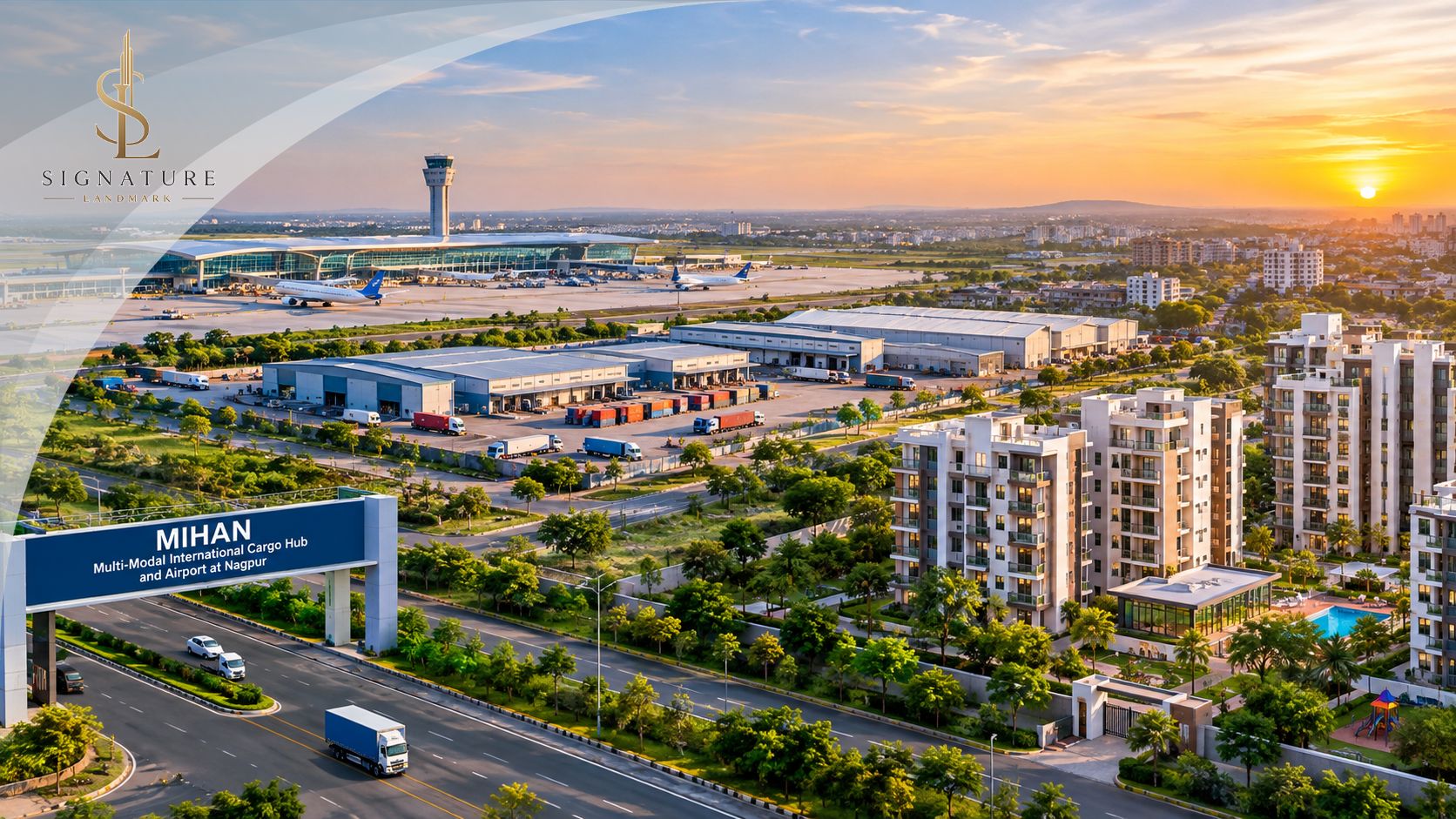

Nagpur is steadily strengthening its position as one of Maharashtra's important industrial, logistics, and commercial centers. With its strategic location in central India, improving infrastructure, and expanding employment opportunities, the city is attracting attention from businesses, professionals, homebuyers, and real estate investors. One of the key developments supporting this growth is MIHAN (Multi-modal International Cargo Hub and Airport at Nagpur).
MIHAN could influence Nagpur's real estate market by encouraging industrial investment, creating jobs, and increasing demand for residential properties. As industries expand and more professionals consider relocating to the city, the need for quality housing, rental accommodation, and modern residential communities could grow.
For homebuyers and property investors, understanding how MIHAN's development relates to housing demand can help identify promising opportunities in Nagpur's evolving property market.
1. Understanding MIHAN and Its Importance
MIHAN is a major development project designed to combine airport-related infrastructure, cargo handling, logistics facilities, and a Special Economic Zone (SEZ). Located near Dr. Babasaheb Ambedkar International Airport, the project aims to support trade, transportation, industrial activity, and business development.
The development includes plans and facilities associated with information technology, manufacturing, logistics, and other commercial activities. Its strategic location and connectivity make it an important part of Nagpur's long-term economic development.
MIHAN's importance extends beyond industrial growth. When businesses establish operations in a region, they can create employment directly and indirectly. Employees, business owners, service providers, and supporting industries all contribute to the local economy. Over time, this activity can increase demand for homes, apartments, rental properties, and neighborhood amenities.
However, the extent of this impact depends on actual investment, project implementation, and sustained employment growth.
2. Industrial Growth Can Increase Housing Demand
Employment is one of the major factors influencing residential real estate demand. As industrial and commercial activities expand around MIHAN, more professionals and workers may seek accommodation close to their workplaces.
This can create demand across several housing categories, including affordable apartments, mid-range flats, independent houses, and premium residential developments.
Employees relocating from other cities may initially prefer rental accommodation before purchasing a property. Families moving for long-term employment may look for larger homes near schools, hospitals, shopping centers, and public transport.
At the same time, residents may benefit from new employment opportunities and consider upgrading their existing housing arrangements.
As a result, industrial development can support both the rental market and the home-buying segment. Nevertheless, housing demand will depend on the number and type of jobs created, employees' income levels, and the availability of suitable homes.
3. Residential Locations That Could Benefit
Locations with convenient access to MIHAN, employment centers, major roads, and everyday amenities may attract increased interest from homebuyers.
MIHAN and Wardha Road
Areas around MIHAN and Wardha Road may appeal to professionals seeking convenient access to the airport, business facilities, and employment hubs. Residential projects with good connectivity and established amenities could attract both buyers and tenants.
Besa and Beltarodi
These residential areas may appeal to families looking for apartments, independent homes, and planned residential communities. Buyers should assess commute times, road conditions, water supply, and the availability of schools and healthcare.
Hingna Road
Hingna's industrial and employment base can support housing demand among workers and professionals connected with nearby industrial establishments. Actual opportunities will vary by neighborhood, project quality, and access to workplaces.
These locations should be viewed as areas worth researching rather than guaranteed high-growth investment destinations. Buyers should compare current property prices, travel times, infrastructure, and future development plans before making a decision.
4. Rental Housing Could Become an Attractive Opportunity
One of the potential benefits of industrial expansion is the growth of the rental housing market. Employees working in IT, aviation, manufacturing, healthcare, and logistics may look for rental homes near their workplaces.
Young professionals and employees living alone may prefer furnished studio apartments or compact one- and two-bedroom flats. Families may look for larger apartments in residential societies offering parking, security, children's play areas, and other amenities.
Property owners who purchase homes in well-connected locations may benefit from rental income if tenant demand remains strong. However, rental returns are not guaranteed. Investors should consider purchase costs, maintenance charges, vacancy periods, property taxes, and the availability of competing rental properties.
Before purchasing a flat for rental purposes, it is sensible to research local rents and speak with property managers about actual tenant demand.
5. Infrastructure Development Can Strengthen Property Values
Industrial growth becomes more valuable to residential real estate when it is supported by reliable infrastructure. Roads, public transport, healthcare facilities, educational institutions, shopping areas, and dependable utilities can make neighborhoods more attractive to residents.
MIHAN's development model combines airport infrastructure, logistics, industrial activity, and supporting commercial and residential facilities. The official MIHAN project overview also identifies residential and commercial complexes among its planned components.
In May 2026, the Union Cabinet approved arrangements enabling the modernization and redevelopment of Nagpur International Airport through a private concessionaire. Such developments may strengthen the city's long-term aviation and connectivity potential
For homebuyers, the key consideration is whether infrastructure improvements translate into better daily connectivity and a more convenient lifestyle. A property near an employment hub may be less attractive if road access, public transport, water supply, or essential services remain inadequate.
6. Affordable and Mid-Range Housing May See Wider Demand
Industrial expansion does not automatically create demand for luxury homes alone. Housing requirements depend on the income levels and family needs of the workforce.
Affordable housing and mid-range apartments could appeal to employees seeking practical accommodation within a manageable budget. Projects offering efficient layouts, reasonable maintenance costs, and access to workplaces may attract first-time buyers.
Premium homes may also find buyers among senior executives, business owners, and professionals with higher incomes. However, developers need to match prices with the purchasing power of the target market.
This creates opportunities for builders to develop different types of housing, from budget-friendly apartments to premium gated communities. A balanced supply of residential properties can support a healthier housing market over time.
7. What Should Property Investors Consider?
Although MIHAN offers long-term development potential, investors should avoid making decisions based solely on future growth expectations.
Here are some important factors to evaluate before investing in a property near MIHAN or another industrial hub:
- Location and connectivity: Check actual travel times to workplaces, major roads, and transport facilities.
- Employment growth: Look for evidence of operating businesses, new investments, and sustained job creation.
- Property prices: Compare rates across nearby projects and established residential neighborhoods.
- Rental potential: Verify prevailing rents, tenant demand, and vacancy levels rather than relying on advertised estimates.
- Legal documentation: Check title documents, relevant approvals, and applicable MahaRERA registration requirements.
- Infrastructure quality: Examine water supply, drainage, electricity, public transport, and access to schools and hospitals.
- Long-term affordability: Include loan interest, registration costs, maintenance, taxes, and potential periods without rental income.
Investors should also compare the property's price with its realistic income potential. Buying at an inflated price can reduce returns even when the surrounding area develops successfully.
Conclusion
MIHAN remains an important part of Nagpur's ambition to strengthen its position as a logistics, aviation, industrial, and commercial center. As business activity expands, the resulting employment opportunities could support demand for residential properties, particularly in locations with good connectivity and access to essential amenities.
Areas around MIHAN, Wardha Road, Besa, Beltarodi, and Hingna Road may deserve attention from buyers researching Nagpur's changing real estate landscape. Nevertheless, each location has different infrastructure conditions, price levels, and development prospects.
For homebuyers, the priority should be finding a property that offers affordability, convenience, and a suitable long-term living environment. For investors, rental demand, purchase price, legal clarity, and realistic returns should guide the decision.
MIHAN could contribute to Nagpur's housing growth, but sustainable property appreciation will depend on actual industrial expansion, employment creation, infrastructure delivery, and balanced residential development. Careful research can help buyers and investors make informed decisions as Nagpur continues to evolve.