
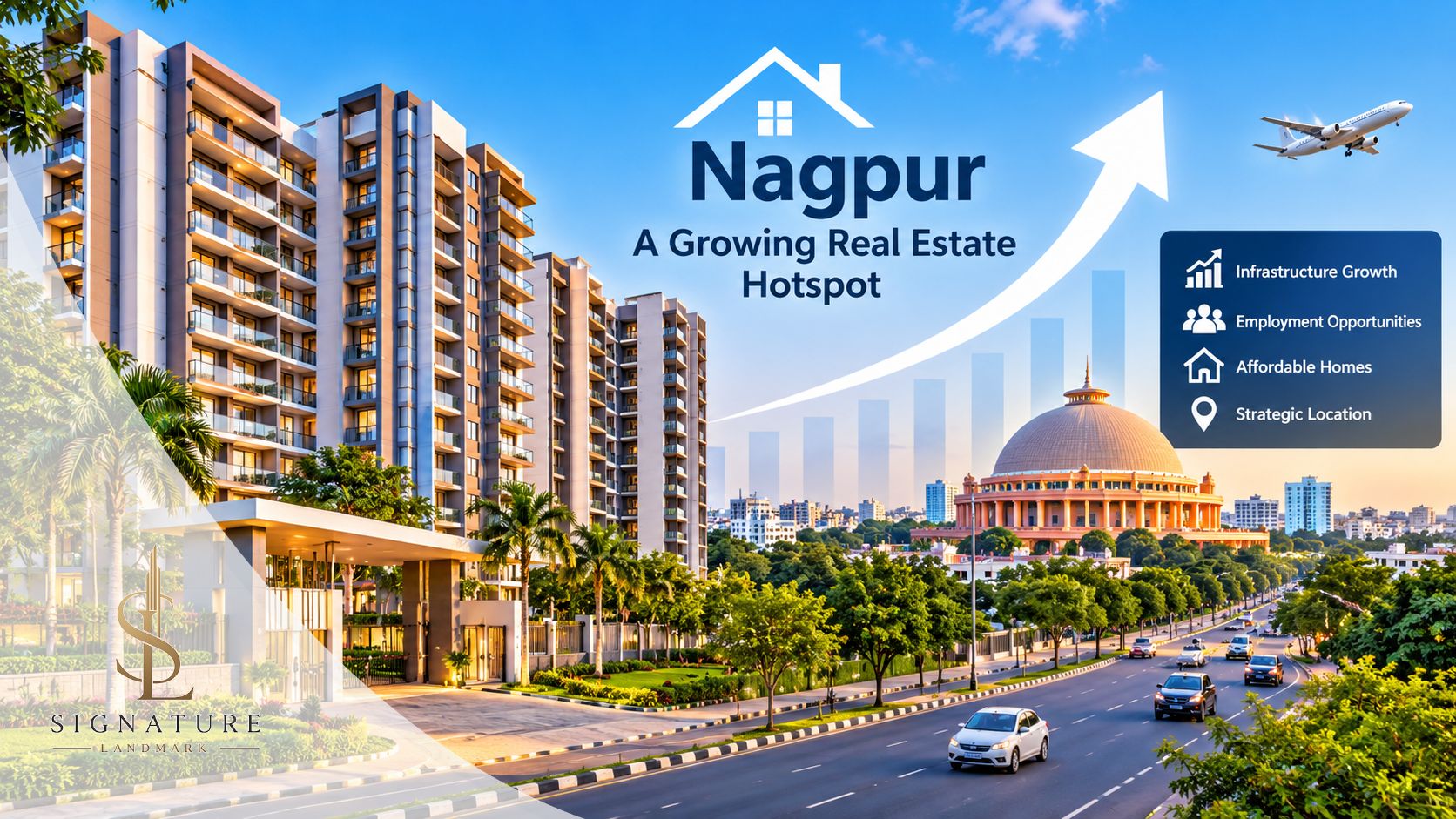

India’s real estate market is evolving as homebuyers and investors look beyond traditional metropolitan cities such as Mumbai, Delhi, Bengaluru, and Pune. Tier-2 cities are attracting growing attention because of their developing infrastructure, expanding employment opportunities, improving connectivity, and comparatively accessible property options.
Nagpur, one of Maharashtra’s important urban centers, is emerging as a city worth watching. Its strategic location, transport infrastructure, industrial activity, and expanding residential areas are creating new possibilities for homebuyers, businesses, and property investors.
For people seeking a home or considering a long-term real estate investment, understanding the growth of Tier-2 cities can help them make more informed decisions. However, every property market has its own risks, and growth prospects should always be evaluated carefully.
1. Affordable Property Options
One of the main reasons buyers consider Tier-2 cities is affordability. Property prices in major metropolitan areas can make it difficult for first-time buyers to purchase spacious homes within their budgets.
Cities such as Nagpur may offer a wider range of housing choices, including apartments, independent houses, residential plots, and properties in developing townships. Depending on the locality and project, buyers may find options that provide more space or amenities at a lower overall cost than comparable properties in larger cities.
This affordability can also help investors diversify their property portfolios without committing the same amount of capital typically required in a major metropolitan market.
Nevertheless, affordability should not be the only consideration. Buyers should compare location, construction quality, legal documentation, maintenance costs, and future resale potential before making a decision.
2. Infrastructure Development and Better Connectivity
Infrastructure plays an important role in shaping real estate demand. Better roads, public transportation, railway connections, and airport access can make residential and commercial locations more attractive.
Nagpur benefits from its strategic position in central India and its established transport links. Its metro network and road infrastructure support urban mobility, while regional and national connectivity contributes to its importance as a business and logistics center.
Areas with convenient access to workplaces, educational institutions, hospitals, and transport facilities may attract greater interest from buyers and tenants.
However, investors should distinguish between completed infrastructure and projects that are merely proposed or under construction. A property’s value depends on actual accessibility, local demand, and the quality of surrounding development, not simply on announcements about future projects.
3. Growing Employment and Industrial Opportunities
Employment is one of the strongest drivers of housing demand. When businesses establish offices, factories, logistics facilities, and service centers, they attract workers who need homes, rental accommodation, and everyday services.
Nagpur has an established industrial and logistics base, with MIHAN, nearby industrial areas, and its central location supporting business activity. New industrial investments may create additional opportunities for local businesses and employment, although the actual impact depends on project execution and job creation.
As employment expands, demand may grow for apartments, family homes, rental properties, shops, and commercial spaces. This can create opportunities for developers and property owners who select locations based on genuine economic activity rather than speculation.
4. Rising Demand for Modern Homes
Today’s homebuyers increasingly consider lifestyle, convenience, and long-term comfort alongside price. Many families look for spacious layouts, parking, security, green spaces, recreational amenities, and reliable access to schools and healthcare.
Tier-2 cities are responding with modern residential apartments, gated communities, plotted developments, and integrated townships. Nagpur’s expanding residential market provides buyers with a range of property types suited to different budgets and household needs.
Premium housing is also attracting attention as some buyers seek larger homes and improved amenities. However, the right choice depends on affordability, family requirements, and the quality of the project, rather than trends alone.
5. New Development Corridors and Emerging Localities
As cities expand, real estate activity can move beyond established neighborhoods into developing areas. Nagpur's growth around industrial, transport, and peripheral urban zones illustrates why buyers are paying attention to emerging locations.
Areas such as MIHAN, Hingna, Besa-Pipla, and other developing corridors may appeal to different buyers depending on their workplaces, budgets, and infrastructure needs.
Before purchasing property in an emerging locality, buyers should investigate road access, water supply, drainage, public transport, nearby employment centers, and approved development plans. They should also check whether the quoted price is supported by actual transactions and local demand.
A developing location can offer potential, but buying too early in an area without essential services may create delays, inconvenience, and resale difficulties.
6. What Recent Market Reports Tell Us
The growing interest in Tier-2 real estate is supported by recent industry research. A July 2026 report from CRISIL Intelligence reported that residential demand across ten major Tier-2 cities grew at a compound annual growth rate (CAGR) of 14% between fiscal years 2021 and 2026. Nagpur, Coimbatore, and Lucknow recorded approximately 20% growth, according to the report.
Separately, a September 2026 report by CII and Knight Frank found that residential prices across eleven emerging Tier-2 markets grew at an average annual rate of 8% from 2016 to 2026, compared with 4% across India's eight largest markets. Nagpur was among the emerging cities identified
These findings highlight the growing importance of smaller cities in India's real estate sector. However, city-level averages do not guarantee similar returns for every neighborhood, project, or property type.
7. Opportunities in Residential and Commercial Real Estate
Tier-2 cities offer opportunities across several property segments.
- Residential properties: Apartments, independent houses, and family homes for end-users.
- Residential plots: Land purchases for buyers considering future construction, subject to legal and planning approvals.
- Commercial properties: Shops, offices, and business spaces in locations with suitable customer or employment demand.
- Rental properties: Homes and commercial units serving professionals, families, and businesses.
Investors should compare the expected rental income, vacancy risk, maintenance expenses, taxes, and resale prospects of each option. Commercial property, in particular, may require more careful assessment of tenant demand and the time needed to find a suitable occupant.
The best investment is not necessarily the property with the lowest price. It is the property that fits the buyer's financial position, purpose, and investment horizon.
8. Important Checks Before Investing in Nagpur
Before purchasing any property, consider these essential checks:
- Verify the title, ownership history, and applicable land-use permissions.
- Check the project's RERA registration where applicable.
- Confirm approved building plans and relevant local authority permissions.
- Compare prices with recent transactions in the same locality.
- Evaluate actual road connectivity, utilities, and nearby facilities.
- Calculate the total cost, including registration, taxes, maintenance, and loan interest.
- Assess rental demand, resale liquidity, and your ability to hold the property long-term.
Buyers should also review the developer's track record and consult a qualified legal professional before signing agreements or making substantial payments.
Conclusion: Is Nagpur a Real Estate Hotspot in 2026?
Tier-2 cities are becoming increasingly important to India's real estate story as infrastructure improves, businesses expand, and homebuyers seek a balance between affordability and lifestyle. Nagpur stands out because of its strategic location, industrial and logistics activity, transport links, and developing residential areas.
Recent market reports provide encouraging evidence of growth in emerging cities, but investment outcomes will depend on local conditions, economic development, and responsible property selection.
For homebuyers, the priority should be finding a suitable, legally sound property that meets their needs. For investors, the focus should be on realistic pricing, sustainable rental demand, and long-term potential rather than promises of quick appreciation.
At Signature Landmark, we believe informed decisions begin with understanding the location, evaluating the property, and checking the facts. Whether you are exploring residential homes, commercial spaces, or plots in Nagpur, careful research can help you identify opportunities that align with your goals.