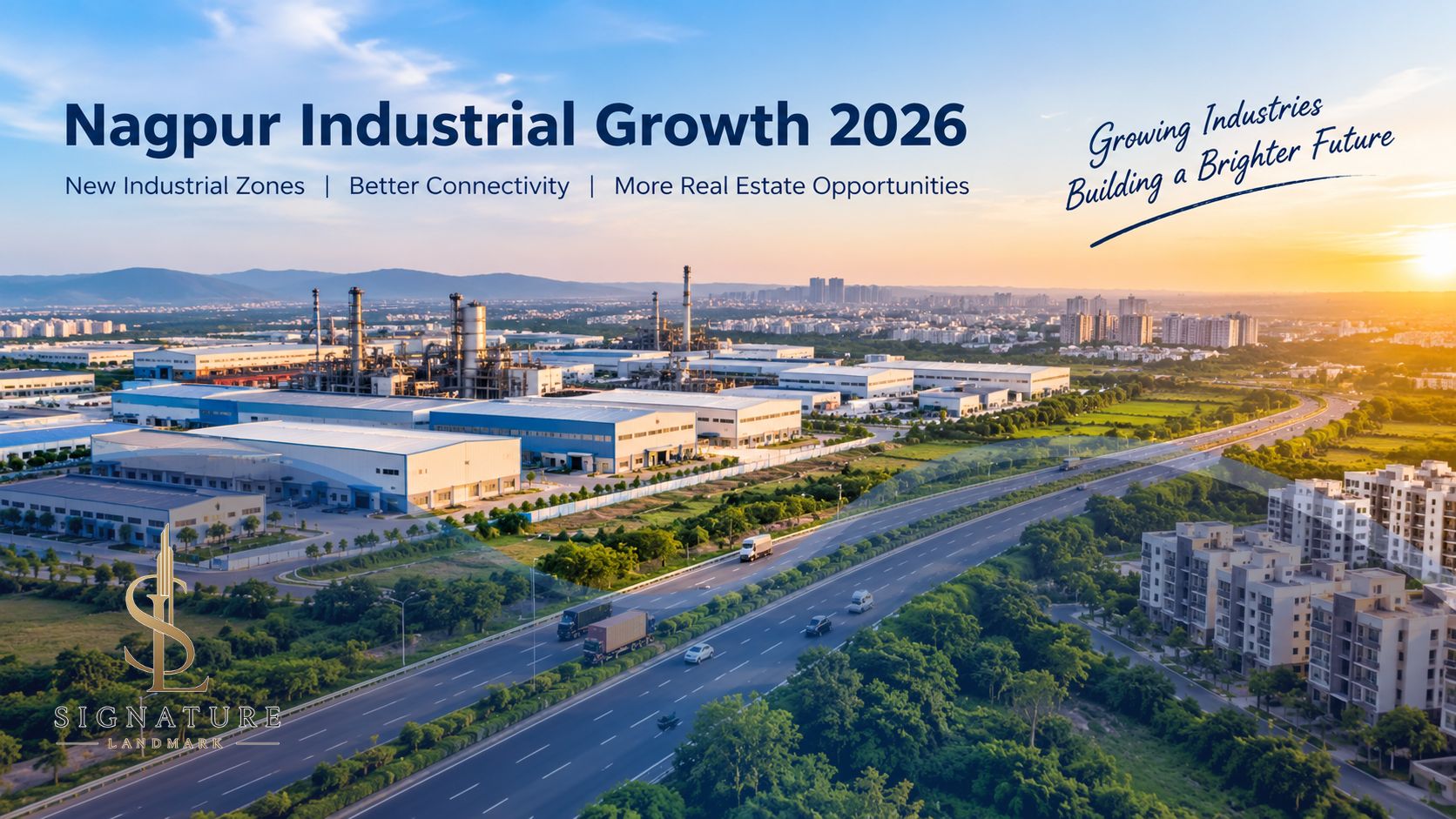

Nagpur is emerging as an important industrial, logistics, and commercial destination in Maharashtra. Its strategic location in central India, improving connectivity, and expanding industrial infrastructure are creating new opportunities for businesses and property investors. As industrial activity develops, demand for housing, commercial spaces, warehouses, and industrial land may also increase.
In 2026, Nagpur's industrial development is gaining attention following plans by the Maharashtra Industrial Development Corporation (MIDC) to acquire additional land for new industrial projects. According to a September 2026 report, MIDC plans to acquire approximately 5,500 acres in Nagpur district, with proposed industrial zones in areas including Narkhed, Katol, Saoner, and Kuhi. These developments could influence the region's real estate market over the coming years.
1. Why Is Nagpur Attracting Industrial Investment?
Nagpur offers several advantages for industrial development. Its central location makes it suitable for transportation, distribution, manufacturing, and warehousing operations serving different parts of India.
The city also benefits from established industrial areas such as Hingna and Butibori. These locations have attracted manufacturing businesses and supporting industries over time. With existing industrial areas approaching capacity, additional industrial land could help accommodate future projects.
Industrial expansion can create demand for supporting services, including transport, logistics, retail, accommodation, and office facilities. This creates opportunities for the wider property market, provided that industrial investments translate into actual business operations and employment.
2. New Industrial Zones Could Support Regional Development
One of the important developments to watch is the proposed expansion of industrial activity into areas such as Narkhed, Katol, Saoner, and Kuhi.
MIDC's reported land acquisition plans indicate that the region is being considered for additional industrial capacity. Saoner has also received attention for a proposed Defence, Nuclear and Aerospace (DNA) industrial corridor, with land acquisition proceedings reported in 2026.
If these projects progress as planned, they could encourage the development of roads, utilities, industrial facilities, and other supporting infrastructure. Local businesses may benefit from increased demand for transportation, construction materials, food services, and accommodation.
However, investors should distinguish between announced projects, land acquisition proceedings, construction activity, and fully operational industrial facilities. Each stage has a different impact on property demand.
3. How Industrial Growth Can Influence Residential Real Estate
Industrial development can create employment opportunities for workers, engineers, managers, technicians, and business owners. As employment increases, some workers may seek homes close to their workplaces.
This can create demand for different residential property types, including:
- Affordable apartments for industrial employees.
- Residential plots for families planning to build homes.
- Rental properties for professionals relocating to the region.
- Larger homes and gated communities for senior employees.
- Residential developments near established roads, schools, hospitals, and daily amenities.
For property buyers, the key consideration is not simply whether an industrial project has been announced. It is whether the project is likely to create sustained employment and whether suitable housing is available within a practical commuting distance.
4. Commercial Property and Warehousing Opportunities
Industrial growth can also benefit commercial real estate. Manufacturing companies and logistics businesses require office space, storage facilities, distribution centers, and supporting services.
Potential opportunities include:
Warehouses and logistics facilities: Businesses may need strategically located storage and distribution space with reliable road access.
Commercial shops: Increasing residential populations can support grocery stores, pharmacies, restaurants, and other neighborhood businesses.
Office spaces: Industrial companies, service providers, and logistics operators may require offices for administration and operations.
Industrial plots: Eligible businesses may seek land for manufacturing, assembly, and other approved industrial activities.
These opportunities depend on actual business demand, infrastructure availability, land-use permissions, and the commercial viability of each location.
5. Infrastructure and Connectivity Will Be Important
Connectivity is a major factor in determining the success of industrial locations. Businesses need dependable transport links to move employees, raw materials, and finished products efficiently.
Nagpur's established road network, railway connections, and regional logistics infrastructure support its position as a central Indian transport hub. The Samruddhi Mahamarg also strengthens connectivity between Nagpur and other parts of Maharashtra.
As new industrial zones develop, improvements in local roads, electricity, water supply, drainage, and public transport will be important. Properties with convenient access to functioning industrial facilities and essential services may be better positioned to attract genuine buyers and tenants.
Nevertheless, proposed infrastructure should not be treated as completed infrastructure. Buyers should verify current access conditions and official project timelines before making investment decisions.
6. What Should Property Investors Consider?
Investing in an emerging industrial growth area requires research and patience. Property prices may rise in anticipation of future development, but appreciation is never guaranteed.
Before purchasing residential plots, commercial property, or industrial land, consider these factors:
- Verify land ownership: Review the title deed, ownership history, and relevant land records.
- Check land-use permissions: Confirm whether the property is approved for residential, commercial, agricultural, or industrial use.
- Review official notifications: Check MIDC, local planning authority, and government records for confirmed development plans.
- Assess connectivity: Visit the site and examine actual road access, utilities, and commuting routes.
- Understand legal restrictions: Investigate acquisition notices, reservations, zoning conditions, and other restrictions affecting the property.
- Compare market prices: Evaluate comparable transactions rather than relying only on projected future prices.
- Plan your investment horizon: Emerging industrial areas may require a longer holding period before substantial demand develops.
Investors should also remember that agricultural land cannot automatically be used for residential or commercial development. Applicable permissions and legal requirements must be checked before purchasing.
7. What Is the Future of Nagpur Real Estate?
Nagpur's industrial expansion could strengthen the city's long-term real estate potential. New manufacturing facilities, logistics operations, and supporting businesses may increase demand for housing, shops, offices, and industrial premises.
Established industrial areas such as Hingna and Butibori offer existing economic activity, while proposed zones around Saoner, Katol, Narkhed, and Kuhi represent locations to monitor as plans progress.
The pace of growth will depend on investment execution, employment generation, infrastructure delivery, and the ability of businesses to operate successfully. Property buyers should therefore focus on locations supported by credible development activity rather than speculation alone.
Conclusion
Nagpur industrial growth in 2026 presents an important development to watch for residential buyers, commercial investors, and landowners. Proposed industrial zones and expansion plans could create new economic activity and support demand for different types of real estate.
For investors, the best approach is to combine long-term planning with careful research, legal verification, and realistic expectations. Understanding where industries are actually developing—and how that development connects with housing and infrastructure—can help buyers make more informed property decisions.
At Signature Landmark, we believe that informed property decisions begin with understanding location, connectivity, development plans, and long-term demand. Whether you are exploring residential plots, commercial spaces, or property investment opportunities in Nagpur, research the fundamentals before making your next move.